

 Smart Control Systems
 Lighting
 Filtration
 Heaters
 Chiller & Cooling Fans
 Thermometers
 Water Pumps
 Air Pumps
 Wavemaker


 Low-Tech Plants
 Medium-Tech plants
 High-Tech Plants
 CO2 Diffusers


 Soil & Substrate
 Driftwood & Rocks
 Caves & Clays
 Filter Media, Sponge & Replacement Parts
 Tubing & Connectors



Low-Tech vs. High-Tech Planted Tank: Which Should You Choose?

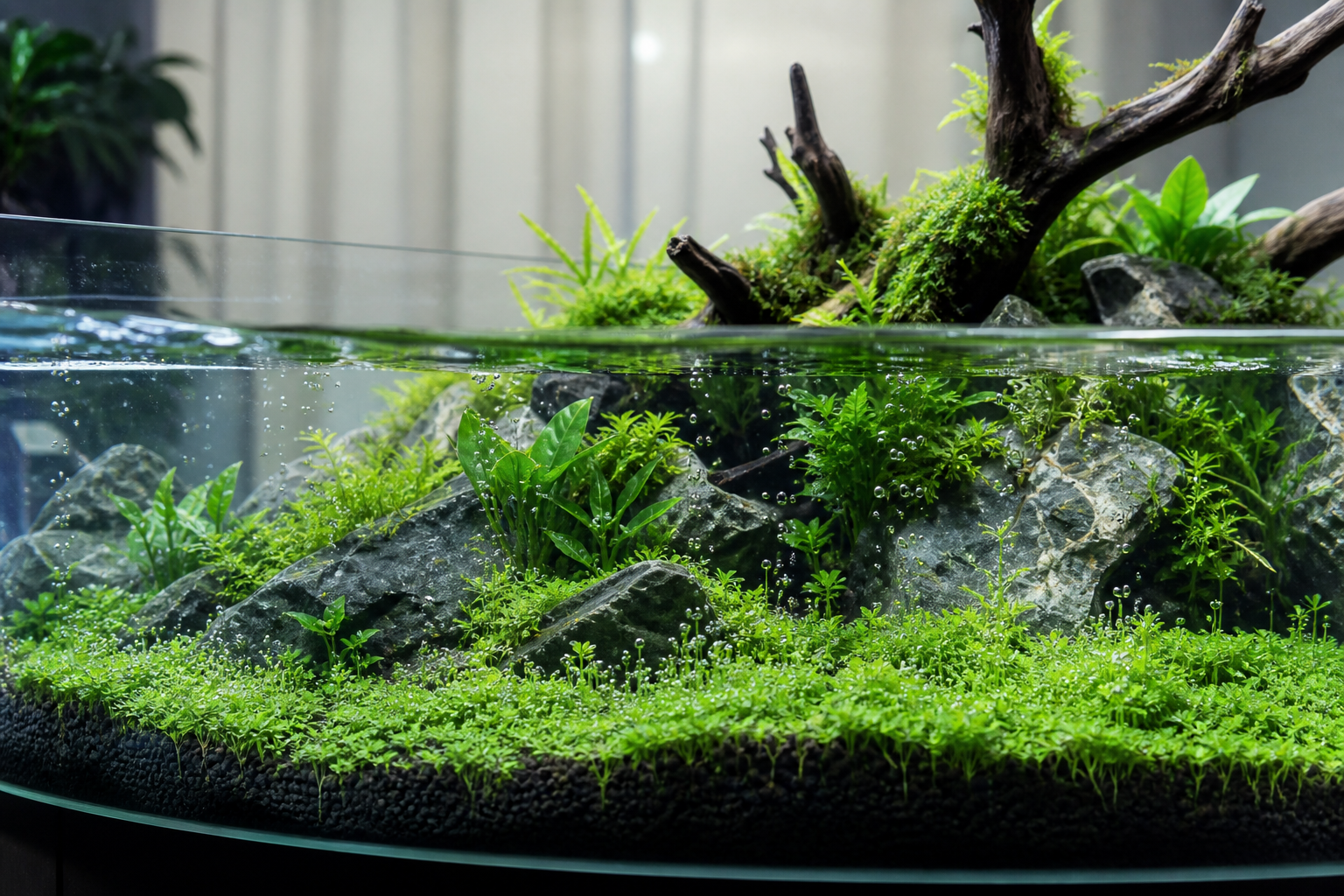
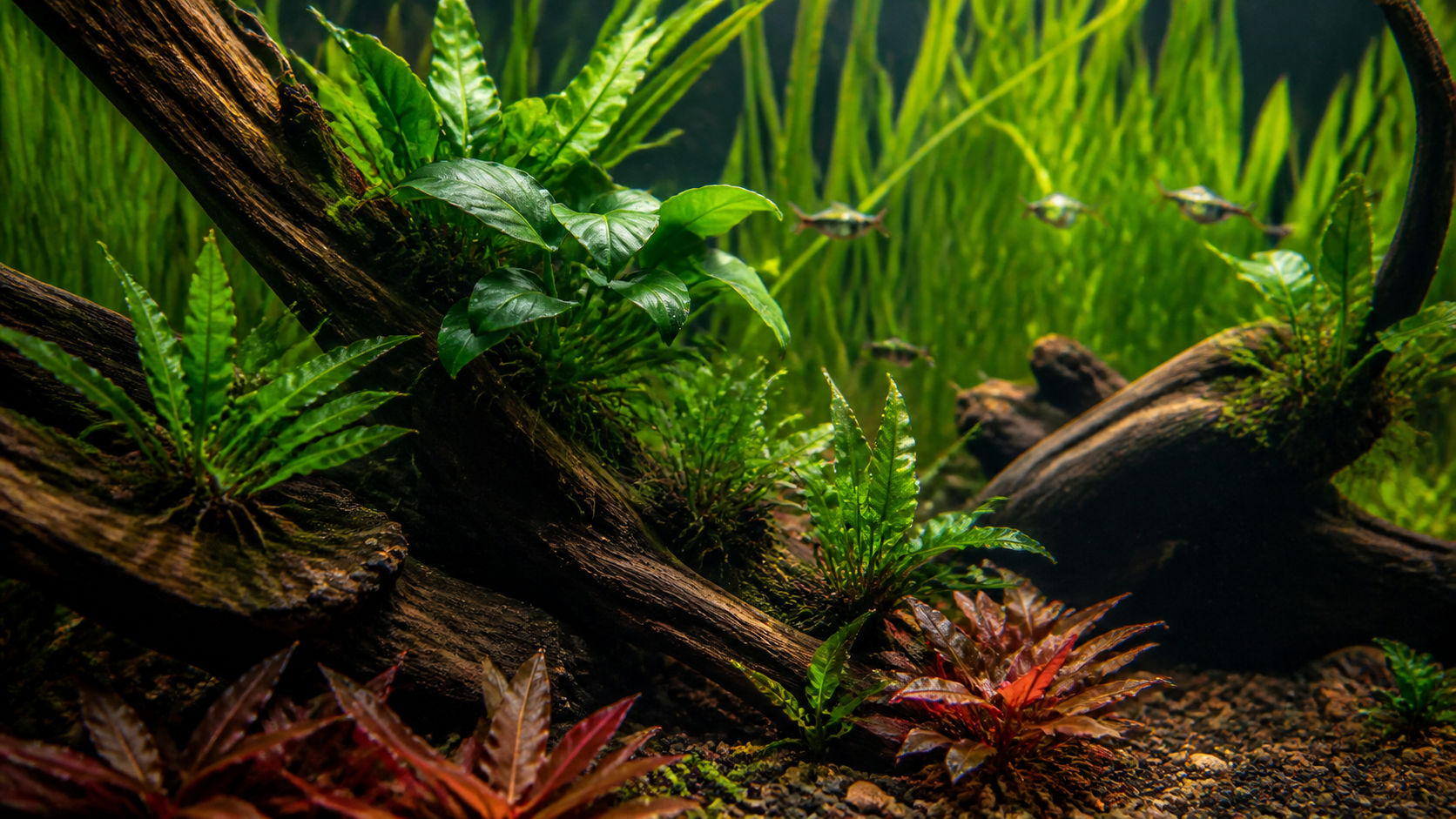
This is one of the first real forks in the planted-tank hobby, and it’s worth deciding deliberately rather than drifting into high-tech gear because it looks more serious. Neither approach is “better” in the abstract — they’re suited to different goals, budgets, and how much routine maintenance you actually want to sign up for.
Table of Contents
- What Actually Separates the Two
- Low-Tech: Strengths and Limits
- High-Tech: Strengths and Limits
- How to Decide
- The Middle Ground: Liquid Carbon
- Common Mistakes on Either Path
- FAQ
Low-Tech vs. High-Tech Planted Tank: Which Should You Choose?
What Actually Separates the Two
The single defining line is pressurized CO₂ injection. Everything else — lighting intensity, fertilizer dosing frequency, plant selection — follows from that one decision. More light without more CO₂ just starves plants faster and feeds algae instead of growth, which is why “just add a brighter light” is the most common way a low-tech tank accidentally breaks.
Low-Tech: Strengths and Limits
A low-tech tank runs on ambient or moderate lighting, root tabs and liquid fertilizer, and no injected CO₂. It’s cheaper to set up, far simpler to maintain, and much more forgiving of an inconsistent dosing schedule. The tradeoff is growth speed and plant selection — carpeting plants and high-light stem plants that demand CO₂ to thrive (like Hemianthus callitrichoides or many red-leaved species) will stall or die back in a true low-tech setup, no matter how well you dose fertilizer.
High-Tech: Strengths and Limits
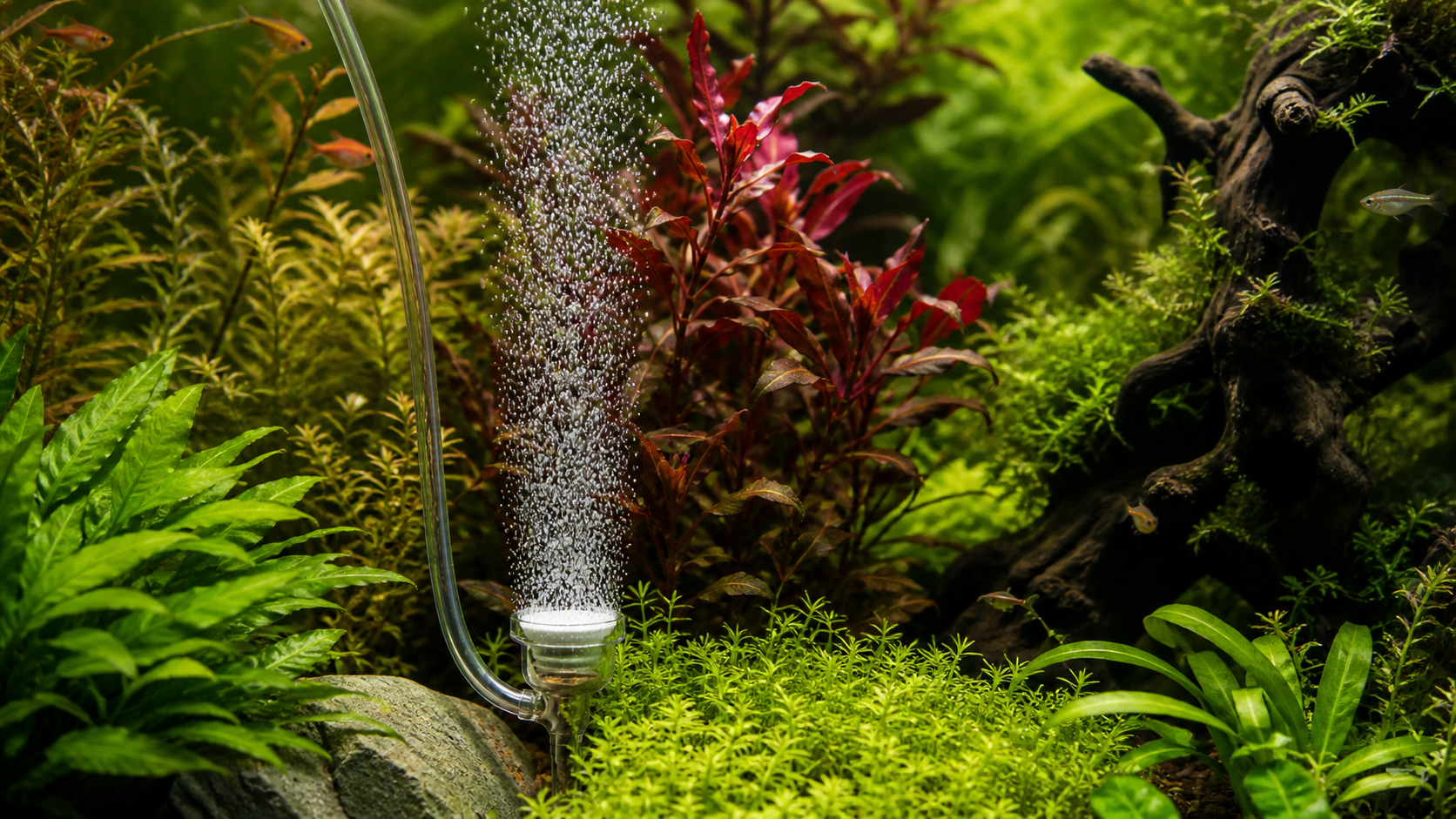
A high-tech tank injects pressurized CO₂ (typically via a regulator and diffuser on a cylinder), runs stronger lighting to match the extra carbon available, and dramatically widens which plants will actually thrive — full carpets, demanding stems, faster-growing aquascapes that recover quickly from trimming. The cost is real: more equipment to buy and maintain, a genuine learning curve around CO₂ dosing, and two specific risks that don’t exist in a low-tech tank — algae from light/CO₂ imbalance, and in the worst case, a CO₂ system overdosing overnight and suffocating fish.
How to Decide
- Choose low-tech if: you want a lower-maintenance tank, you’re newer to planted tanks, budget matters, or your plant list doesn’t actually require a carpet or the most demanding red stems.
- Choose high-tech if: you specifically want a full carpet or a competition-style aquascape, you’re comfortable monitoring equipment daily, and you’ve already run a low-tech tank long enough to understand the basics of lighting and fertilizing.
- Don’t choose high-tech just because it looks more serious. A well-run low-tech tank with the right plant selection can look every bit as lush as a high-tech one — the CO₂ system is a tool for a specific outcome, not a badge of skill.
The Middle Ground: Liquid Carbon
A liquid carbon supplement dosed daily gives a low-tech tank a meaningful chunk of the growth boost a full CO₂ system provides, without a cylinder, regulator, or diffuser to manage — and it doubles as a mild algae suppressant. It’s not a full substitute for pressurized CO₂ (true carpeting plants still generally need the real thing), but for the vast majority of low-tech setups it closes most of the gap that matters.
Common Mistakes on Either Path
- Adding strong lighting to a low-tech tank without adding carbon to match — this is the single fastest route to an algae outbreak.
- Jumping straight to high-tech before understanding basic fertilizing and lighting, making it hard to tell whether a problem is CO₂-related or something more basic.
- Running CO₂ without checking it at all — even a rough visual check (plants pearling with tiny oxygen bubbles) tells you more than assuming the regulator is behaving.
- Turning off CO₂ and lights at the same time rather than staggering them, wasting the carbon that’s still dissolved after lights-out.
- Switching plant lists back and forth between low-tech and high-tech species while still deciding which path to commit to — pick a lane for a few months before judging results.
Frequently Asked Questions
Yes — plenty of tanks start low-tech and add pressurized CO₂ once the basics (fertilizing, lighting, algae control) are already dialed in, which is often the easier learning path.
Yes, both upfront (cylinder, regulator, diffuser, stronger light) and ongoing (CO₂ refills, more frequent fertilizing) — budget for both the equipment and the routine, not just the tank.
Absolutely — a well-chosen low-tech plant list, good lighting balance, and consistent fertilizing produces a genuinely lush tank; CO₂ expands what’s possible, it doesn’t gatekeep “good.”
True carpeting plants (like Hemianthus callitrichoides), many red-leaved stem plants, and anything marketed as “difficult” or “advanced” typically need the extra carbon a pressurized system provides.
It can be if overdosed, especially overnight when plants stop consuming it — always pair a CO₂ system with a way to add surface agitation before lights-off and monitor dosing rather than setting and forgetting it.
It closes a meaningful part of the gap for most easy-to-moderate plants, but true carpeting and the most demanding species still generally need pressurized CO₂ to really thrive.
Conclusion
Start low-tech unless you have a specific plant or aquascape style that genuinely requires CO₂ — it’s cheaper, more forgiving, and teaches the fundamentals that make a later move to high-tech far smoother. Upgrade deliberately, not because the gear looks impressive.
Recommended Products
- Carbo+ Liquid Carbon
- All-in-One Red Fertilizer
- 6kg CO₂ Complete System Kit
- Glass CO₂ Diffuser Set
- WRGB LED Light Bar