 Discus
 Cichlids
 Angelfish
 Plecos & Catfish
 Community & Nano Fish
 Shrimp, Snails & Invertebrates
 Low-Tech Plants
 Medium-Tech plants
 High-Tech Plants
 Live Corals

 Terrarium Kits & Jars
 Terrarium Plants & Moss
 Bioactive Clean-up Crew

 Smart Control Systems
 Lighting
 Filtration
 Heaters
 Chiller & Cooling Fans
 Thermometers
 Air Pumps
 Wavemaker
 Protein Skimmer

 CO2 Diffusers
 CO2 Accessories & Drop Checkers
 Liquid Carbon & CO2 Alternatives





 Soil & Substrate
 Driftwood & Rocks
 Caves & Clays

 Filter Media, Sponge & Replacement Parts
 Tubing & Connectors




Using Driftwood and Rocks to Build a Natural Aquascape

Using Driftwood and Rocks to Build a Natural Aquascape
Table of Contents
- Why Hardscape Matters
- Choosing Driftwood
- Choosing Rock
- Layout Principles
- Preparing Hardscape Before It Goes In
- Combining Wood and Rock
- Planting Around Your Hardscape
- Common Beginner Mistakes
- Frequently Asked Questions
Why Hardscape Matters
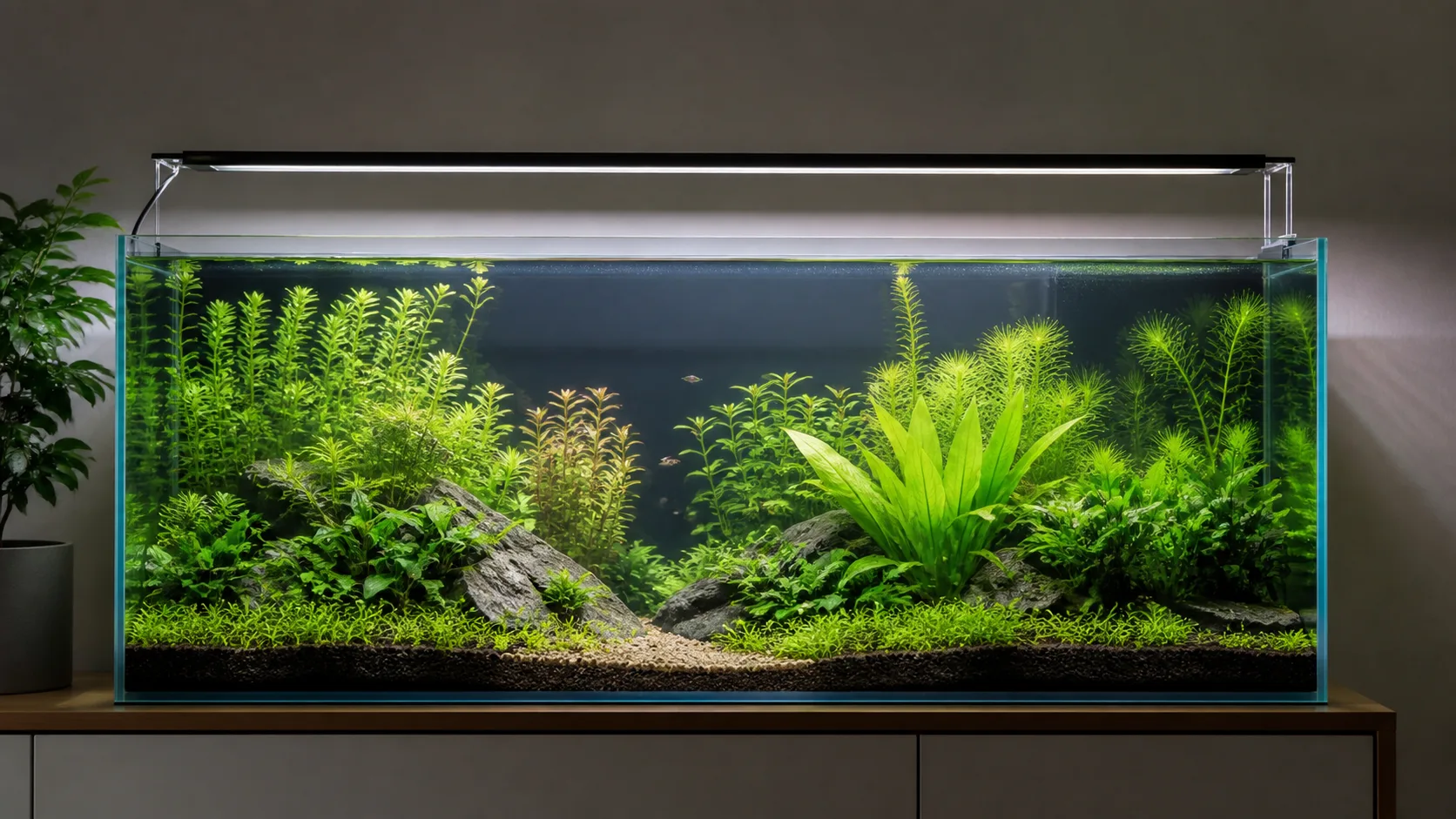
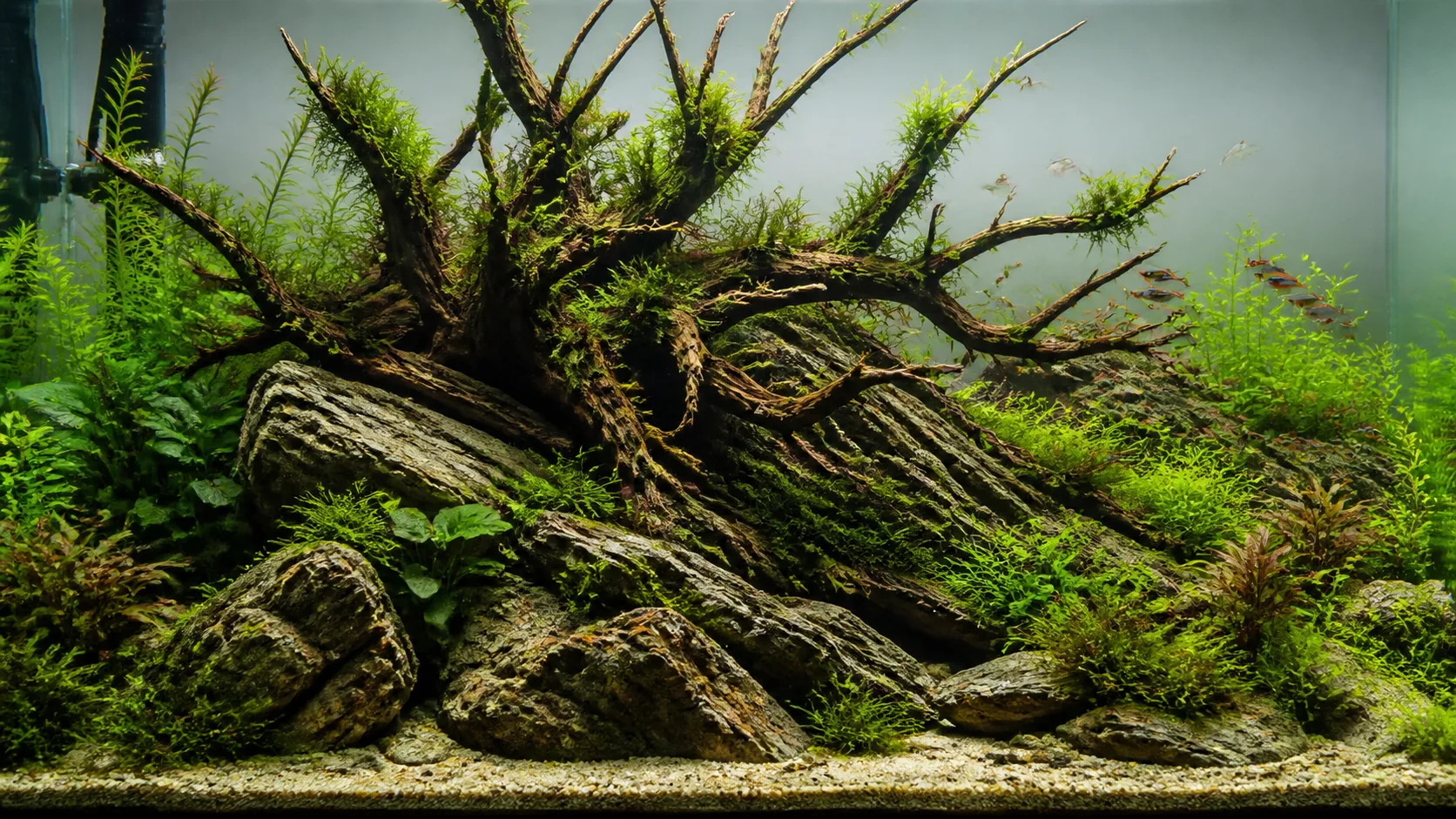
Hardscape — the driftwood and rock in an aquascape — does something plants alone can’t: it establishes structure, scale, and a sense of history before a single leaf is planted. A tank built around a well-placed piece of wood or a considered rock arrangement reads as a scene rather than a collection of plants, because the hardscape gives the eye a path to follow and a reason for everything else to be positioned where it is.
This is also why hardscape should almost always go in first, before plants and substrate are finalized around it — trying to build a layout by placing plants first and squeezing hardscape in afterward usually produces a cluttered, undirected result, while starting with hardscape gives you a skeleton to design the rest of the tank around.
Choosing Driftwood
Real aquarium driftwood is denser, pre-treated, and safer for long-term submersion than wood picked up outdoors, which can leach unknown substances or introduce pests. Look for a piece with an interesting natural silhouette — branching structure, an interesting curve, visible grain — since the wood itself is often the single most visually important element in the entire tank.
Recommended Products
- Natural Aquarium Driftwood, 1.080kg (Code 6) — a compact piece suited to smaller tanks or as a secondary accent
- Natural Aquarium Driftwood, 1.900kg (Code 4) — a mid-size piece, a strong candidate for a focal point in a medium tank
- Natural Aquarium Driftwood, 5.845kg XL (Code 3) — a large statement piece for bigger tanks or a dramatic centerpiece
Every piece of natural driftwood is one of a kind, which is exactly the appeal — no two aquascapes built around real wood look identical, even using the same product listing. Buy based on your tank’s actual footprint and the scale you want the piece to play (a subtle accent versus a dominant centerpiece) rather than picking the largest piece available; a piece that overwhelms a smaller tank creates a cramped, top-heavy look rather than a natural one.
Choosing Rock
Rock brings a different visual language than wood: harder edges, more geological weight, and often a stronger sense of permanence. It works especially well for a mountainscape or iwagumi-inspired layout, or paired with driftwood to suggest a riverbank or forest floor scene where roots meet exposed stone.
Recommended Products
- Dragon Stone, 1kg — heavily textured, porous stone popular for layered, naturalistic arrangements
- Brown Petrified Hardscape Rocks, 5kg — a larger bulk quantity, useful for building out a full rock formation rather than a single accent stone
Buy more rock than you think you’ll use — hardscaping is as much about editing down a larger pile to the pieces that actually work together as it is about placing everything you bought. Having extra pieces on hand also lets you swap a stone that isn’t sitting right without being stuck with only the exact pieces already committed to the layout.
Layout Principles
A few core principles separate a hardscape that reads as intentional from one that looks randomly placed. The golden ratio (roughly a 60/40 or 70/30 split of the tank’s width) is a common reference point for positioning your main focal point off-center rather than dead-center, which almost always looks more natural and dynamic than perfect symmetry. Odd numbers of major hardscape pieces — one, three, or five rather than two or four — tend to look more organic as well, since even numbers often read as paired or deliberate in a way nature rarely is.
Scale and proportion matter as much as placement: a single oversized piece of driftwood in a small tank can dominate the whole scape in a way that reads as cramped rather than dramatic, while a tiny piece in a large tank can get visually lost. Match the size of your hardscape to your tank’s actual dimensions, and consider how much of the final height and width the piece will occupy once it’s positioned, not just how large it looks sitting outside the tank.
Preparing Hardscape Before It Goes In
New driftwood almost always floats at first, since it hasn’t yet absorbed enough water to sink on its own. Soak it in a separate container of water for one to several weeks — sometimes longer for very dense or large pieces — changing the water every few days, until it stays submerged without help. Some aquascapers speed this up by boiling smaller pieces, which also helps leach out tannins faster, though boiling isn’t practical for very large pieces.
Rinse rock thoroughly under running water and scrub off any loose dust or debris before it goes in the tank. If you’re at all unsure of a rock’s origin or composition, a simple vinegar test helps: a few drops of vinegar that fizz or bubble on the rock’s surface indicate it likely contains calcium carbonate, which will slowly raise your water’s hardness and pH over time — worth knowing before you build a layout around it, especially for a soft-water or low-pH planted tank.
Combining Wood and Rock
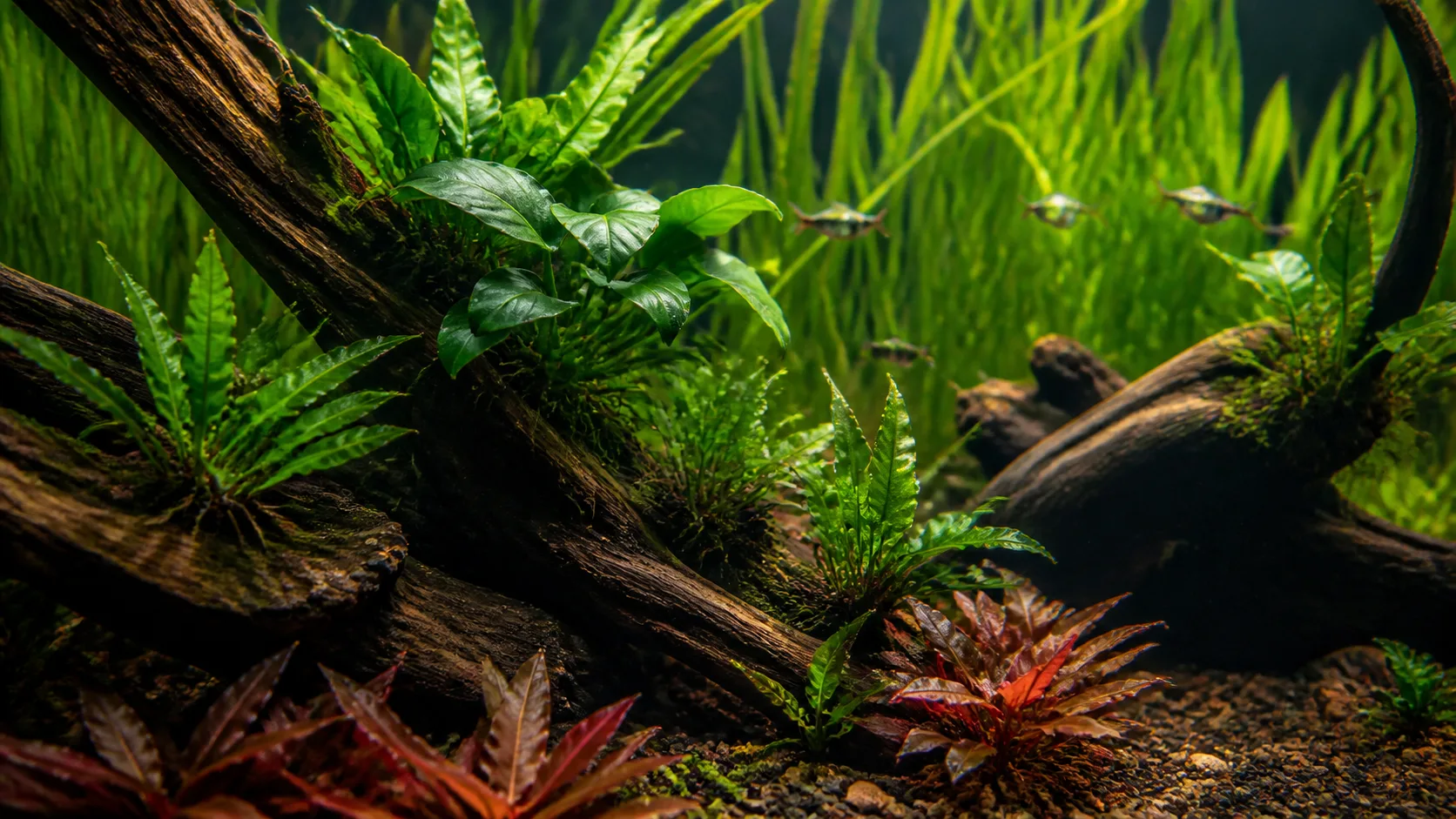
Wood and rock paired together generally read as more natural than either material used alone, echoing how driftwood and stone actually appear together in real streams, riverbanks, and forest floors. A common, effective approach is to use rock to visually anchor the base of a piece of driftwood — as if the wood settled naturally against or between existing stones — rather than placing the two materials in separate, unrelated areas of the tank.
Consistency in origin and color palette between your wood and rock also matters more than beginners often expect: mixing a warm reddish driftwood with a cool grey stone can look accidental rather than composed, while pieces that share tonal qualities tend to blend into a single, cohesive scene rather than competing for attention as two separate materials.
Planting Around Your Hardscape
Once your hardscape composition is finalized, plants should reinforce it rather than hide it. Low, carpeting or mid-ground plants at the base of driftwood or rock help it look rooted into the substrate rather than placed on top of it, while taller background plants can frame the composition without competing with the hardscape’s silhouette for attention. Attaching moss or small epiphytes like Anubias or Bucephalandra directly to wood and rock (rather than planting them in substrate) is one of the most effective ways to make new hardscape look established rather than freshly placed.
Resist the urge to plant so densely that the hardscape disappears within a few months of growth — leave enough open structure visible that the wood or rock silhouette that made the layout compelling in the first place is still readable once the plants mature.
Common Beginner Mistakes
- Placing plants first and fitting hardscape around them afterward
- Centering the main focal point instead of using an off-center golden-ratio placement
- Using an even number of major hardscape pieces, which tends to look deliberate rather than natural
- Filling every area of the tank with no negative space left to rest the eye
- Skipping the float test and preparation soak, then fighting driftwood that keeps surfacing
- Mixing wood and rock with clashing colors or origins that read as unrelated rather than cohesive
- Overplanting so densely that the hardscape disappears within a few months
Frequently Asked Questions
How long does driftwood take to sink on its own?
It varies widely by density and size — anywhere from a week to over a month of soaking. Larger, less dense pieces take longer; some aquascapers weigh wood down temporarily with a clean rock or suction-cup mount while it fully waterlogs.
Is it safe to use rocks I found outdoors?
Only with real caution — unknown origin rocks can affect water chemistry unpredictably or carry contaminants. A vinegar test can flag calcium carbonate content, but if you’re unsure, aquarium-specific rock sold for hardscape use is the safer choice.
Will driftwood tannins hurt my fish?
No, the tea-colored tint is cosmetic and harmless — many fish species from blackwater habitats actually thrive in tannin-tinted water. Presoak the wood separately first if you’d prefer clearer water from day one.
How many pieces of hardscape should I use?
An odd number — one, three, or five major pieces — generally looks more natural than an even number, which tends to read as paired or deliberately symmetrical.
Should hardscape go in before or after substrate?
Rough in your substrate first for basic shape and slope, then place hardscape on top of it, adjusting the substrate around the pieces as needed. Finalize planting only after the hardscape position is locked in.
Can I attach plants directly to driftwood and rock?
Yes — mosses, Anubias, Bucephalandra, and similar epiphytes can be tied or glued directly to hardscape and will root onto the surface over time, which is one of the most effective ways to make a new layout look mature quickly.
Why does my rock keep raising my water’s pH and hardness?
It likely contains calcium carbonate, which slowly dissolves into the water. A vinegar fizz test on a dry piece can confirm this before it goes in the tank — worth checking in advance if you’re keeping soft-water or low-pH species.
Conclusion
Driftwood and rock are what turn a planted tank into an aquascape — they give the layout structure, scale, and a sense of natural history that plants alone can’t provide. Choose pieces sized to your tank, place hardscape before plants, lean on the golden ratio and odd-numbered groupings for a natural-feeling composition, and let your planting reinforce the hardscape rather than bury it.
If you’re planning your next layout, explore MyTankScape’s current driftwood and rock selection to find pieces that fit the scale and style you have in mind.
Recommended Products
Internal Link Map
- Natural Aquarium Driftwood, 1.080kg (Code 6)
- Natural Aquarium Driftwood, 1.900kg (Code 4)
- Natural Aquarium Driftwood, 5.845kg XL (Code 3)
- Dragon Stone, 1kg
- Brown Petrified Hardscape Rocks, 5kg
- Best Low-Tech Aquarium Plants for Beginners
- The Complete Guide to Using Moss in Terrariums and Paludariums