

 Smart Control Systems
 Lighting
 Filtration
 Heaters
 Chiller & Cooling Fans
 Thermometers
 Water Pumps
 Air Pumps
 Wavemaker

 Low-Tech Plants
 Medium-Tech plants
 High-Tech Plants

 CO2 Diffusers


 Soil & Substrate
 Driftwood & Rocks
 Caves & Clays
 Filter Media, Sponge & Replacement Parts
 Tubing & Connectors



Terrarium Moss: A Guide to Selection, Display, and Care

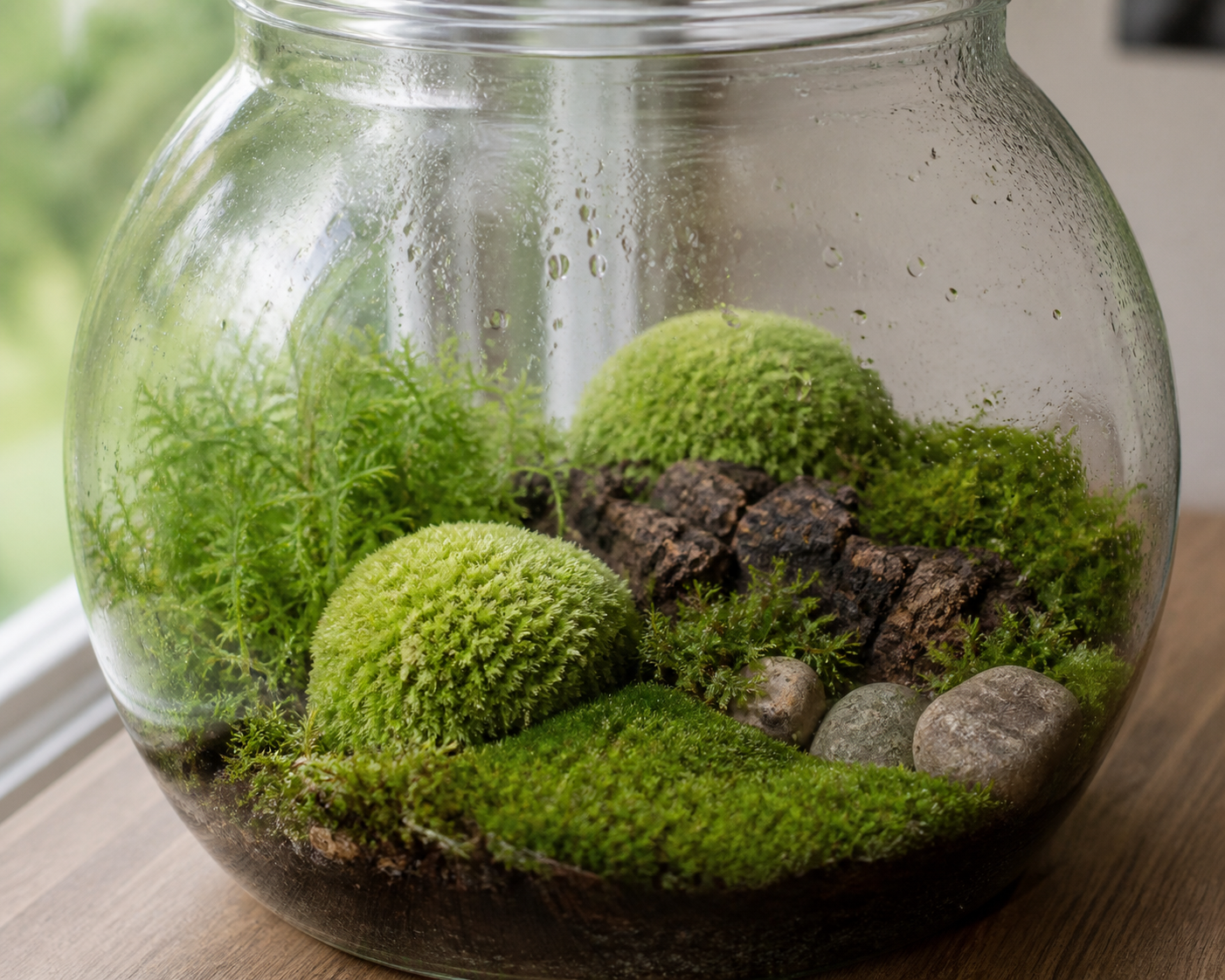
Moss is what turns a jar of soil and rocks into a miniature forest. It is also the part of a terrarium that most often goes brown in the first month, usually because the wrong moss was matched to the wrong spot. This guide helps you choose between six common types, arrange them so they look natural, and keep them green.
Table of Contents
- Six Types of Terrarium Moss Compared
- How to Choose the Right Moss
- Display Ideas That Look Natural
- Daily and Weekly Care
- Why Your Moss Is Turning Brown
- Helpers: Springtails, Sphagnum, and Humidity
- FAQ
Terrarium Moss: A Guide to Selection, Display, and Care
Six Types of Terrarium Moss Compared
Cushion Moss – The Pale Pillow
Cushion moss (Leucobryum glaucum) grows in dense, rounded mounds with a distinctive pale, silvery green. It is the one to reach for when you want soft “hills” in the foreground. It is also the fussiest of the group: it likes shade, steady humidity, and good airflow, and it sulks if it sits wet and stagnant.
Sheet Moss – The Workhorse Carpet
Sheet moss forms a flat, dense mat. It is the easiest way to cover bare soil, line the edges of a jar, or hide the substrate around rocks. It is also the most forgiving choice for a first terrarium.
Feather Moss – Soft, Frilly Texture
Feather moss has a fine, feathery look that works well on slopes and around driftwood. It prefers moist, shaded conditions, so it suits the humid back corner better than a bright, open spot.
Star Moss – Bright Little Rosettes
Star moss (Syntrichia ruralis) grows in small star-shaped rosettes and tolerates drier spells better than most. We cover it in detail in our complete moss guide for terrariums and paludariums.
Forest Moss – The Woodland Floor
Forest moss gives the classic, slightly wild forest-floor look and is a good ground cover for natural landscapes, fairy gardens, and bonsai bases.
Spike Moss – The Fern-Like Accent (Not a True Moss)
Spike moss (Selaginella) is a small vascular plant that only looks like moss. Its spreading, fern-like stems add a different shape and a brighter green. It needs consistently high humidity, so keep it in a closed or mostly closed container, and it is sold by the stem rather than by the clump.
How to Choose the Right Moss
- First terrarium, open or semi-open jar: sheet moss, forest moss, or star moss. They put up with the occasional missed misting.
- Closed jar with steady humidity: add cushion moss, feather moss, and spike moss. They reward the stable, damp air.
- Bright spot near a window: star moss handles more light than cushion or feather moss, but keep every moss out of direct sun.
- Tiny desk jar: one or two moss types only. Mixing six species in a few centimeters looks cluttered and makes watering a compromise.
Display Ideas That Look Natural
- Layer by height: feather moss at the back, cushion mounds in the middle, sheet or forest moss as the ground cover in front.
- Let moss climb the hardscape: press thin pieces against rocks and bark so they look like they grew there.
- Use odd numbers: three cushion mounds read as natural; two or four look arranged.
- Leave negative space: a patch of bare soil or a rock face makes the green around it look richer.
- Add one accent: a few stems of spike moss in front of a cushion mound give a “forest understory” effect.
For hardscape ideas that suit moss, see our guide to using driftwood and rocks to build a natural aquascape.
Daily and Weekly Care
- Press, don’t bury: moss has no real roots. Lay it on moist substrate and press it in firmly so it makes full contact; never cover it with soil.
- Mist instead of pouring: a light mist every day or two keeps the surface damp without waterlogging the soil underneath.
- Use low-mineral water: rain, distilled, or reverse-osmosis water avoids the white mineral crust and chlorine that tap water can leave on delicate moss.
- Give bright, indirect light: a few hours of soft light is plenty. Direct sun cooks moss through glass within an hour. Our lighting guide explains how to judge intensity.
- Ventilate: open a closed jar for a few minutes every few days to refresh the air and discourage mold.
- Trim lightly: snip any overgrown or dead patches so the healthy moss has room to spread.
Why Your Moss Is Turning Brown
- Dry, crisp, and brown: too little humidity or too much light. Mist more often, move it out of the sun, and partly close the lid.
- Dark, slimy, and smelly: too wet with too little airflow. Cut away the rotten patches, stop misting for several days, and ventilate.
- Pale and leggy: too little light. Move the terrarium somewhere brighter, with indirect light only.
- White fuzz: usually mold on a too-damp surface. Remove the affected moss and add cleanup help (see below).
Helpers: Springtails, Sphagnum, and Humidity
Springtails are tiny, harmless creatures that eat mold and decaying matter. A small colony is one of the simplest ways to keep a closed moss terrarium clean. Sphagnum moss is not a display moss, but a damp layer of it under the substrate acts as a moisture reservoir. For larger or more open set-ups, an ultrasonic mist maker raises humidity without soaking the moss.
One thing to avoid: Marimo “moss balls” are an aquatic algae, made for aquariums. They are not terrarium moss and should not be kept dry. If you keep shrimp, they are a lovely addition to the tank instead; see Shrimp Keeping 101.
Frequently Asked Questions
Sheet moss, forest moss, or star moss. They tolerate small mistakes in watering and humidity better than cushion, feather, or spike moss.
Yes, if they share similar humidity needs. Group thirsty types together and tougher types together, and keep the number of species small in a small jar.
It needs a moist surface to sit on, not to be buried. A layer of damp substrate works well, with the moss pressed firmly on top.
Usually every day or two in a lightly ventilated jar, and less in a sealed one. Aim for a damp surface, not standing water.
No. Spike moss (Selaginella) is a small vascular plant with fern-like growth. It is treated like moss in terrariums but needs higher, steadier humidity.
You can in a pinch, but the minerals and chlorine in tap water build up over time. Rain, distilled, or RO water keeps moss healthier long term.
Conclusion
Choose moss by moisture and light first and looks second. Start with a forgiving ground cover, add cushion, feather, or spike moss where humidity is steady, mist with clean water, keep air moving, and the whole terrarium will fill in over the following weeks.
Recommended Products
- Cushion Moss
- Feather Moss
- Spike Moss
- Pinecone with Live Springtails
- Ultrasonic Mist Maker
- DIY Terrarium Kit