 Discus
 Cichlids
 Angelfish
 Plecos & Catfish
 Community & Nano Fish
 Shrimp, Snails & Invertebrates

 Low-Tech Plants
 Medium-Tech plants
 High-Tech Plants

 Live Corals


 Terrarium Kits & Jars
 Terrarium Plants & Moss
 Bioactive Clean-up Crew


 Smart Control Systems
 Lighting
 Filtration
 Heaters
 Chiller & Cooling Fans
 Thermometers
 Air Pumps
 Wavemaker
 Protein Skimmer

 CO2 Diffusers
 CO2 Accessories & Drop Checkers
 Liquid Carbon & CO2 Alternatives





 Soil & Substrate
 Driftwood & Rocks
 Caves & Clays
 Filter Media, Sponge & Replacement Parts
 Tubing & Connectors





CO₂ Systems Explained: Do You Need One?

CO₂ Systems Explained: Do You Need One?
Table of Contents
- What CO₂ Injection Actually Does
- Do You Actually Need CO₂?
- How a Pressurized CO₂ System Works
- Choosing a CO₂ Diffuser
- Liquid Carbon: The Non-Pressurized Alternative
- Setting Up Safely
- Dialing In Your CO₂ Level
- Common Beginner Mistakes
- Frequently Asked Questions
What CO₂ Injection Actually Does
Aquatic plants use carbon dioxide, light, and nutrients to photosynthesize, and in a closed aquarium, dissolved CO₂ is almost always the first thing to run out — long before light or fertilizer become the limiting factor. Tap water and normal atmospheric exchange only supply a fraction of what fast-growing plants can use once you increase lighting intensity, which is why “more light” alone often stalls out a planted tank rather than improving it.
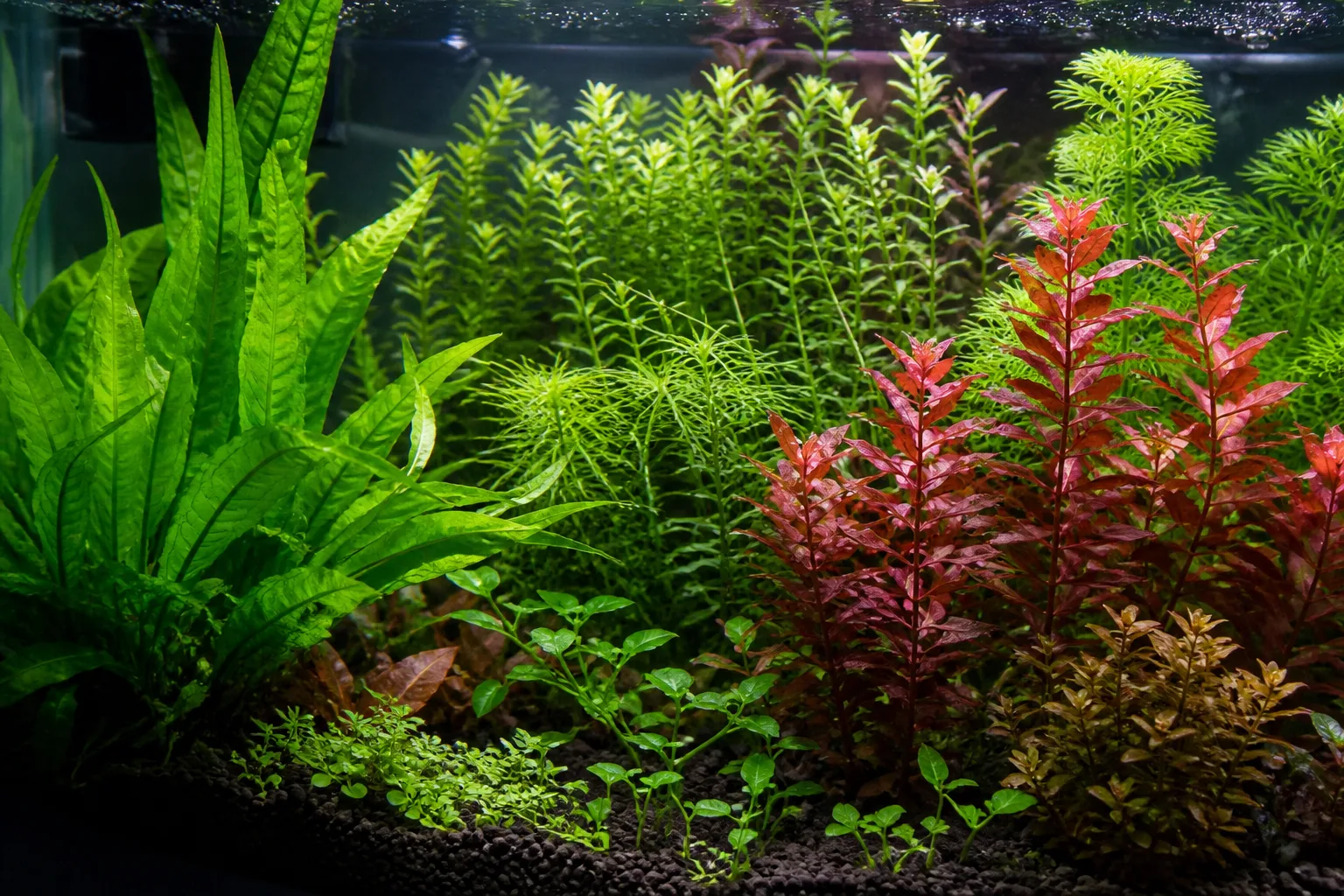
Injecting supplemental CO₂ raises the dissolved concentration in the water column, letting plants photosynthesize faster, grow denser, and develop richer color — particularly in red and fine-leaved stem plants that struggle to thrive without it. The tradeoff is cost, equipment, and the need to actively monitor a gas that’s dangerous to fish in excess, which is exactly why this is a decision worth making deliberately rather than defaulting into.
Do You Actually Need CO₂?
The honest answer for most beginner and intermediate tanks is: not yet, and possibly not at all. CO₂ injection only pays off when your lighting is strong enough to be the bottleneck instead of the gas itself — pushing high light onto a tank without enough CO₂ to match it is one of the most common causes of algae outbreaks in the hobby, since the plants can’t use the light fast enough and algae fills the gap instead.
CO₂ is genuinely worth considering once any of the following applies to your tank: you’re running high-output lighting and seeing slow growth or algae despite good maintenance, you want to keep demanding red or fine-leaved stem plants that stall without it, or you’re building a dense, competition-style aquascape where growth speed and plant density matter. If none of those describe your situation, the better next step is usually adjusting your light duration or intensity before adding a second, more complex system on top.
How a Pressurized CO₂ System Works
A full pressurized CO₂ setup has four core parts working together: a gas cylinder that stores CO₂ under pressure, a regulator that steps that pressure down to a safe, controllable rate, a bubble counter that lets you see and count how many bubbles per second are entering the tank, and a diffuser that breaks the gas into fine bubbles so it actually dissolves into the water rather than escaping to the surface.
Recommended Product
- 6kg CO₂ Cylinder Complete System — cylinder, regulator, and bubble counter bundled and ready to use
Buying a bundled system like this is usually the simplest route for a first setup, since the regulator and bubble counter are already matched to the cylinder’s fitting rather than something you need to source and check compatibility on separately. A 6kg cylinder is sized well beyond a single small tank’s needs and will run a moderate-sized planted aquarium for months between refills, which matters because refilling is far less frequent — and far cheaper per use — than most beginners expect.
Bubbles per second is a useful reference point once you know your tank’s volume, but treat it as a starting estimate rather than a precise dose — actual CO₂ concentration in the water depends on diffuser efficiency, surface agitation, and tank shape, so two identically-set bubble counters can produce different real-world CO₂ levels in different tanks.
Choosing a CO₂ Diffuser
The diffuser is where dissolved CO₂ actually gets delivered into the water, and the type you choose has a real effect on how efficiently gas dissolves versus simply bubbling up and escaping at the surface. Two solid options for a planted tank at different budgets:
Recommended Products
- CO₂ Diffuser Glass Spreader Set — glass diffuser with a U-shaped tube and check valve, a classic in-tank option
- CO₂ Diffuser Aluminum Alloy Atomizer — suction-base atomizer that breaks gas into very fine bubbles for better dissolution
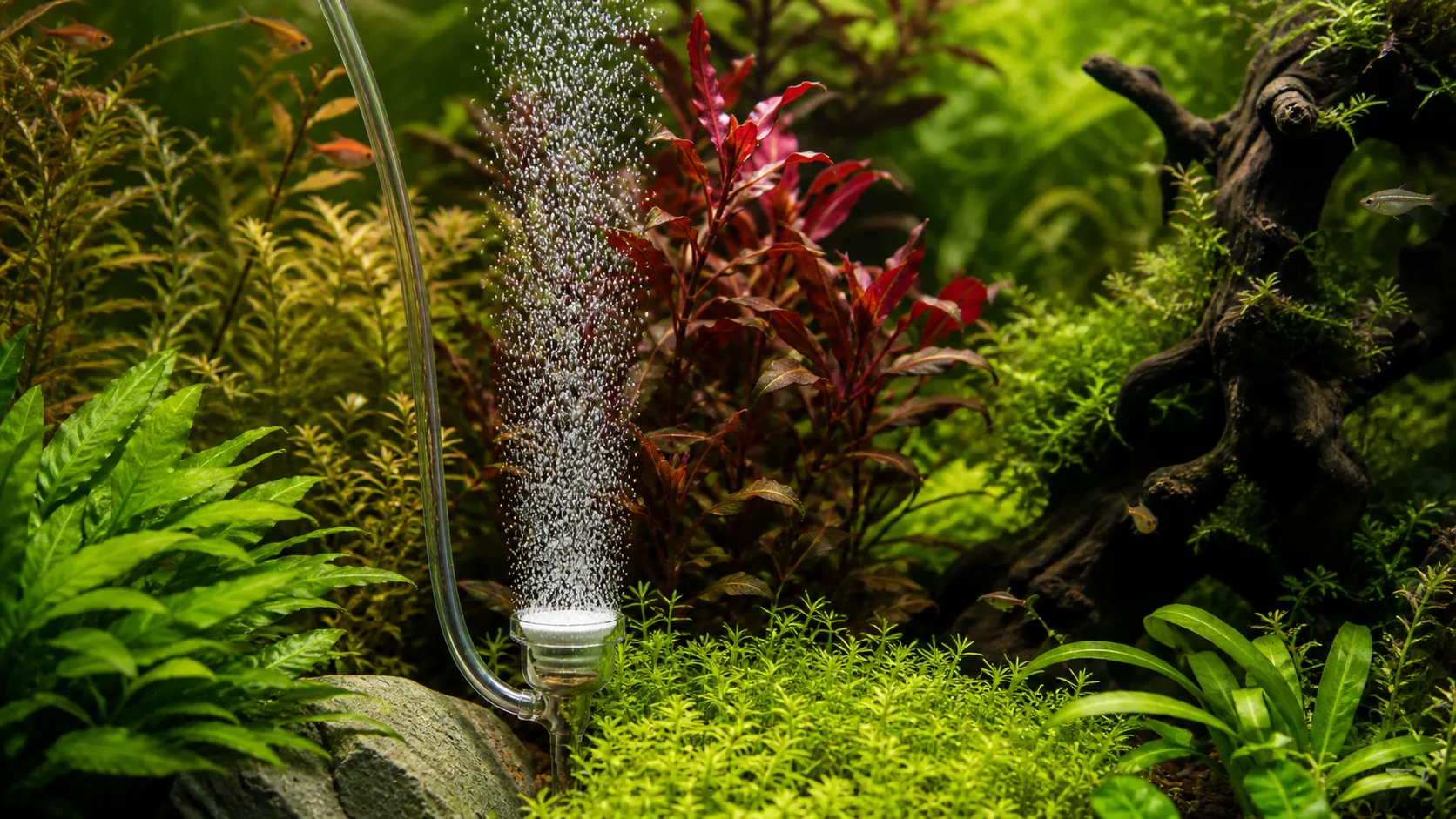
A glass diffuser sits inside the tank and produces a steady mist of small bubbles that rise and dissolve as they travel through the water column — it’s simple, easy to clean, and doesn’t hide any equipment outside the tank. An atomizer-style diffuser with a suction base typically produces even finer bubbles for better gas transfer efficiency, which can matter more in a taller tank where bubbles have less time to dissolve before reaching the surface.
Either style needs a check valve between the diffuser and the regulator to stop water from siphoning backward into your gas line overnight, which is exactly why the glass spreader set above already includes one built in — if you buy a diffuser without one, add a separate check valve rather than skipping it.
Liquid Carbon: The Non-Pressurized Alternative
If a pressurized system feels like more commitment than your tank needs right now, liquid carbon supplements offer a middle ground — a bioavailable organic carbon source you dose directly into the water column rather than injecting gas.
Recommended Product
- Carbo Plus Liquid Carbon — organic carbon supplement, a practical CO₂ alternative for low and moderate light tanks
Liquid carbon won’t match what a real pressurized system delivers to a high-light, plant-dense tank, but it noticeably improves growth in low-to-moderate light setups, has a mild algae-suppressing effect at normal doses, and requires zero equipment beyond the bottle itself — no cylinder, no regulator, no tubing to route. It’s a genuinely sensible choice for anyone who wants a growth boost without committing to a full pressurized build, and a reasonable way to test whether more CO₂ actually helps your specific tank before spending on hardware.
Setting Up Safely
A pressurized CO₂ system is safe when set up correctly, but a few basics matter. Route tubing so it can’t kink or get pinched, since a blocked line causes pressure to build up on the regulator side rather than reaching the tank. Keep tubing organized and off the floor where it can be stepped on or chewed by pets.
Recommended Product
- Stainless Steel U-Shaped CO₂ Tube Holder — keeps tubing routed cleanly over the tank rim
A simple tube holder like this keeps the line from sliding into the tank or dangling awkwardly off the rim, which matters more than it sounds — a line that’s constantly shifting position is one that’s easy to accidentally kink or dislodge from the diffuser.
Always turn your CO₂ off overnight unless you’re running it through a solenoid tied to a timer, since plants consume CO₂ and produce oxygen during the day but do the reverse at night — continuing to inject gas with no lights on and no photosynthesis happening risks driving oxygen too low and CO₂ too high for fish comfort while you’re asleep.
Dialing In Your CO₂ Level
The safest way to gauge dissolved CO₂ is a drop checker — a small indicator that changes color based on the CO₂ level in the water, giving you a visual reference independent of bubble count alone. Green generally indicates an adequate level for plant growth, blue indicates too little, and yellow indicates too much and a real risk to fish. If you don’t have a drop checker on hand, watch your fish instead: fish gasping at the surface or unusually lethargic first thing in the morning, right before lights-on, is a strong sign your overnight CO₂ level is too high.
Increase your bubble rate gradually — in small increments over several days — rather than jumping straight to a level you’ve read about online, since tank shape, surface agitation, and stocking density all change how much CO₂ your specific tank can tolerate. A rate that works well in one tank can be too aggressive in another of the same size simply because of a different filter outflow or surface ripple.
Common Beginner Mistakes
- Adding CO₂ to a low-light tank where it won’t meaningfully help and just adds cost
- Increasing the bubble rate too quickly instead of adjusting gradually over days
- Running CO₂ 24/7 instead of turning it off overnight or on a timer with a solenoid
- Skipping a check valve, risking water siphoning back into the gas line
- Ignoring fish behavior (gasping, lethargy near lights-on) as an early warning sign
- Choosing a diffuser that’s undersized for the tank, producing bubbles too large to dissolve efficiently
Frequently Asked Questions
Do I need CO₂ for a low-light planted tank?
Usually not. Low and moderate light tanks with easy-care plants generally do well without pressurized CO₂, and adding it without enough light to use it often just adds cost without much visible benefit.
Is liquid carbon a real substitute for pressurized CO₂?
For low-to-moderate light tanks, yes — it provides a meaningful growth boost without equipment. For high-light, plant-dense setups, it won’t fully replace what a pressurized system delivers.
How do I know if my CO₂ level is too high?
Fish gasping at the surface, unusual lethargy, or labored breathing — especially right before lights-on when overnight CO₂ has had time to build up — are the clearest warning signs. A drop checker turning yellow is another reliable indicator.
Should I run CO₂ all the time?
No. Turn it off overnight, ideally on a timer synced with your lighting, unless you’re using a solenoid valve for automatic control. Plants don’t use CO₂ in the dark, so continuing to inject it overnight only raises risk to your fish.
What size CO₂ cylinder do I need for one tank?
A 6kg cylinder comfortably supplies a single moderate-sized planted tank for months between refills, making it a practical choice even if you think you only need a smaller amount — refills are infrequent enough that the larger size rarely goes to waste.
Glass diffuser or atomizer — which should I choose?
Both work well. A glass diffuser is simple, easy to clean, and sits entirely in-tank. An atomizer with a suction base tends to produce finer bubbles for slightly better dissolution, which can help more in a taller tank.
Can too much CO₂ kill my fish?
Yes, if the level climbs too high, especially overnight when plants aren’t producing oxygen. This is exactly why gradual bubble rate increases, a check valve, and turning CO₂ off overnight all matter.
Conclusion
CO₂ injection is a genuinely powerful upgrade for a planted tank, but it’s a tool for a specific situation — strong lighting, demanding plants, or a dense aquascaping goal — not a default add-on for every tank. Start by being honest about your lighting and plant choices, try liquid carbon if you want a growth boost without the equipment, and only move to a full pressurized system once you’re confident it solves a real bottleneck rather than adding complexity for its own sake.
If you’ve decided a pressurized system is right for your tank, explore MyTankScape’s current CO₂ equipment to put together a setup that matches your tank size and experience level.
Recommended Products
Internal Link Map
- 6kg CO₂ Cylinder Complete System
- CO₂ Diffuser Glass Spreader Set
- CO₂ Diffuser Aluminum Alloy Atomizer
- Stainless Steel U-Shaped CO₂ Tube Holder
- Carbo Plus Liquid Carbon
- Best Low-Tech Aquarium Plants for Beginners
- How to Start Your First Freshwater Aquarium