 Discus
 Cichlids
 Angelfish
 Plecos & Catfish
 Community & Nano Fish
 Shrimp, Snails & Invertebrates
 Low-Tech Plants
 Medium-Tech plants
 High-Tech Plants
 Live Corals

 Terrarium Kits & Jars
 Terrarium Plants & Moss
 Bioactive Clean-up Crew

 Smart Control Systems
 Lighting
 Filtration
 Heaters
 Chiller & Cooling Fans
 Thermometers
 Air Pumps
 Wavemaker
 Protein Skimmer

 CO2 Diffusers
 CO2 Accessories & Drop Checkers
 Liquid Carbon & CO2 Alternatives



 Soil & Substrate
 Driftwood & Rocks
 Caves & Clays
 Filter Media, Sponge & Replacement Parts
 Tubing & Connectors



Best Beginner Corals for Your First Reef Tank

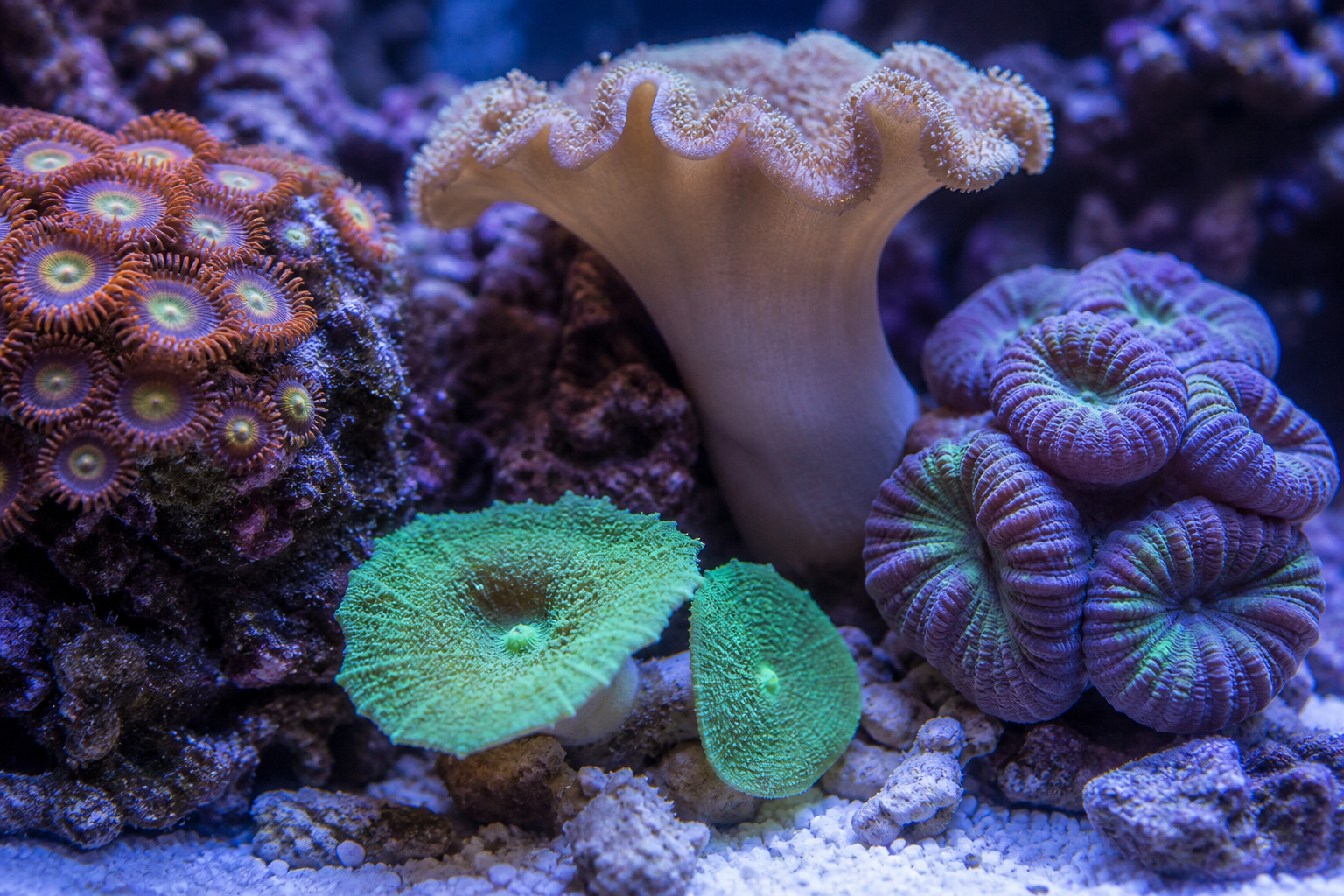
Table of Contents
- Quick Comparison
- The Best Beginner Corals, Ranked
- Corals to Skip at First
- Where to Place Each Coral
- How to Pick a Healthy Coral
- A Realistic First-Reef Lineup
- What Every Easy Coral Still Needs
- Common Beginner Coral Mistakes
- FAQ
Best Beginner Corals for Your First Reef Tank
Quick Comparison
| Coral | Type | Light | Flow | Best placement |
|---|---|---|---|---|
| Zoanthids | Soft | Medium to high | Medium to high | Middle to upper rock |
| Mushroom corals | Soft | Low to medium | Low to medium | Lower, shaded rock |
| Leather corals | Soft | Medium | Medium | Middle, with space |
| Acan brain coral | LPS | Moderate | Low to moderate | Lower to middle |
| Lobophyllia | LPS | Moderate (150–200 PAR) | Moderate | Lower part of the tank |
| Montipora | SPS | Medium to high | High | Upper rock |
The Best Beginner Corals, Ranked
1. Zoanthids – The Candy-Colored Carpet
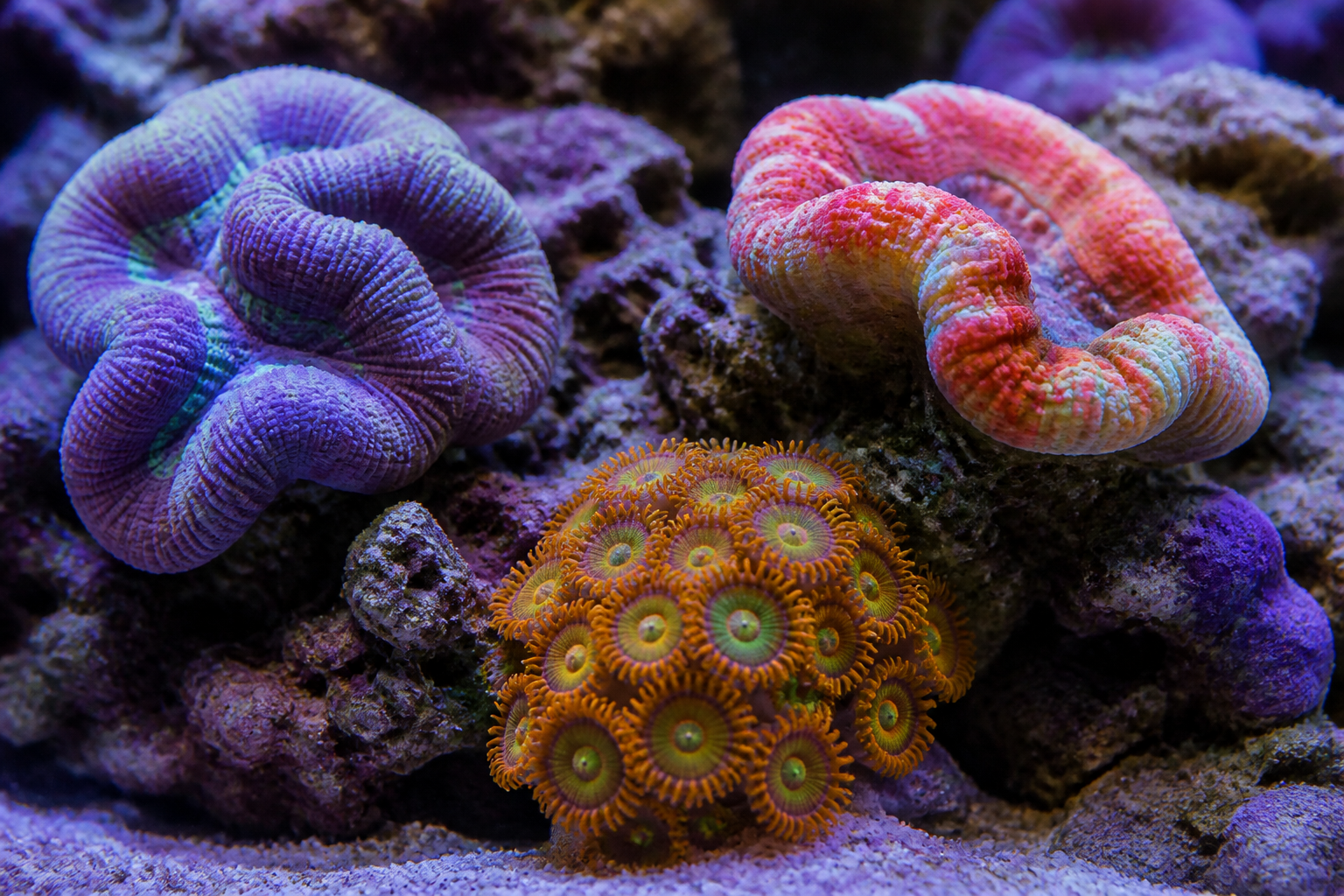
Zoanthids, or “zoas,” are soft corals that spread into mats of small, flower-like polyps in almost every color. They are easy, fast-growing and forgiving, which is why they top most beginner lists. They like medium to high light and flow, and they need a steady temperature of about 24–26°C. Safety note: some zoanthids carry a potent toxin, so wear gloves and eye protection when you handle or frag them, and keep them away from cuts.
Green button polyps are a zoanthid that grows in tight clusters of small, bright green “buttons”. Like other zoas they are easy and spread quickly in medium to strong light with moderate flow at about 22–26°C, and the same safety rules apply: gloves and eye protection when you handle them. Give them their own patch of rock, away from mushroom corals, so the two do not compete for space.
2. Mushroom Corals – The Low-Light Spreaders
Mushroom corals are soft, disc-shaped and happy in low to medium light and flow, so they suit the shaded lower rock where little else will grow. They spread steadily, which is a feature until they cover a neighbor, so give them their own patch of rock.
3. Leather Corals – The Tough Swayers
Leather corals have thick, rubbery bodies that wave gently in the current. They are hardy, tolerate a range of light, and sometimes shed a waxy film as part of normal growth. Give them room, because soft corals can release compounds into the water that irritate neighboring stony corals, and regular water changes help keep that in check.
4. Acan Brain Coral – The Easygoing Showpiece
Acan is a large polyp stony (LPS) coral with a ridged, brain-like surface in vivid purple and green. It is easy to care for in a stable reef, but it needs space: leave room between it and its neighbors so it can extend without a fight. Acclimate it slowly before placing it.
5. Lobophyllia – The Fleshy Statement Piece
Lobophyllia grows thick, fleshy folds in bold colors and does best in the lower part of the tank with moderate light and moderate flow. It benefits from spot feeding with small pieces of mysis or brine shrimp, and it should be acclimated slowly to new conditions.
6. Hammer and Torch Corals – Beautiful, but Give Them Room
These Euphyllia species sway their long tentacles in moderate light and flow and are popular LPS corals. They are manageable once your tank is stable, but they have long “sweeper” tentacles that sting neighbors, so plan generous spacing before you buy.
7. Montipora – The Gentle Step Into SPS
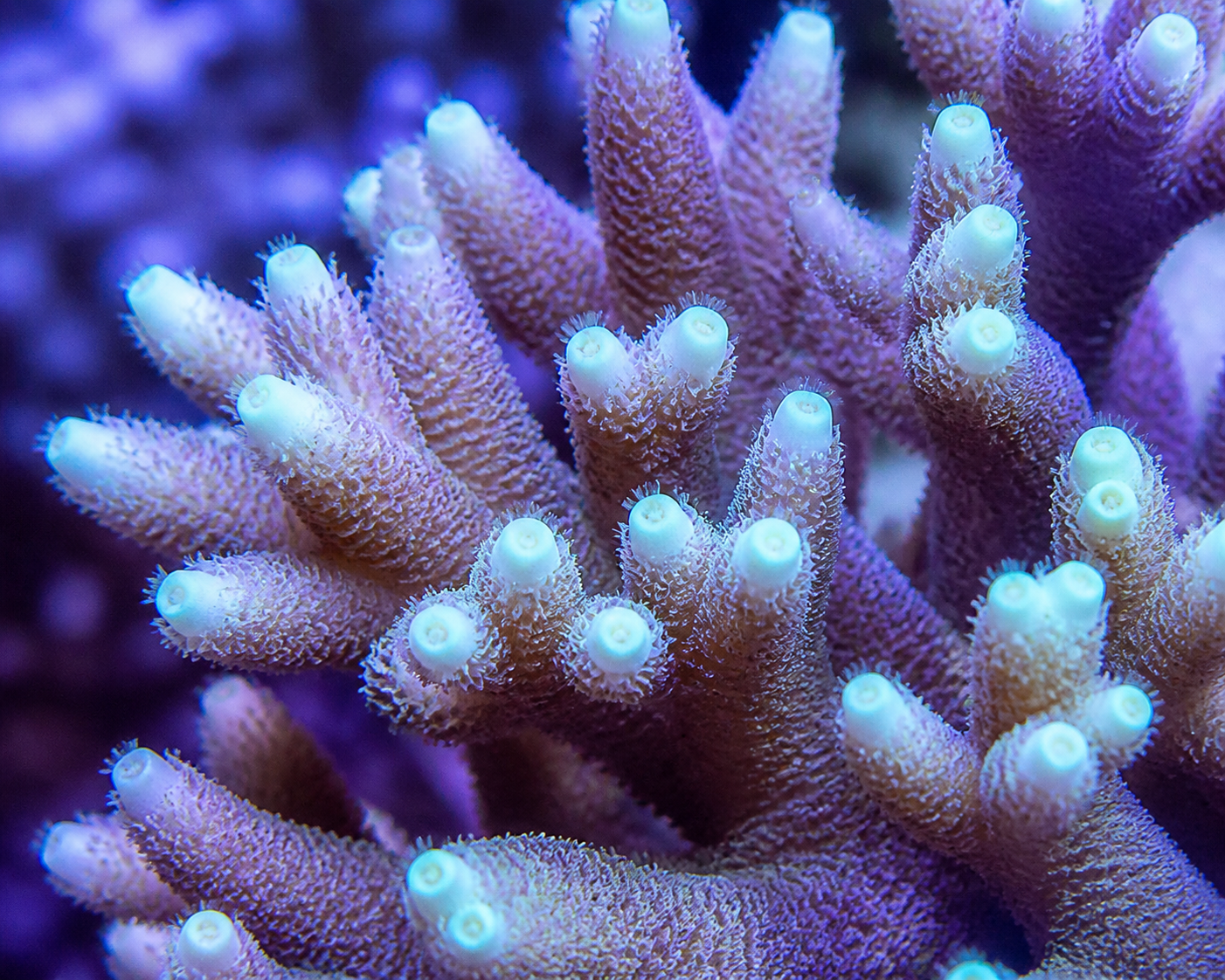
Montipora is often called the easiest SPS coral. It grows fast in medium to high light and strong flow, but it still needs steady alkalinity, calcium and magnesium. Add it only after your tank has held stable numbers for months.
Corals to Skip at First
- Acropora: stunning, but demanding. It wants strong light, strong flow and rock-steady chemistry, and it loses tissue fast when something drifts.
- Goniopora (“flowerpot”): notoriously difficult to keep alive long term, even for experienced keepers.
- Sun corals and other non-photosynthetic corals: they do not get energy from light and need regular, targeted feeding to survive.
Where to Place Each Coral
- Top of the rockwork (brightest, strongest flow): zoanthids and, later, Montipora.
- Middle of the rockwork: leather corals and Euphyllia, with plenty of room around them.
- Lower rock and sand bed (dimmer, gentler flow): Lobophyllia, Acan and mushroom corals.
- Spacing: leave several centimeters between corals so tentacles and growth do not collide. Crowding is a common cause of one coral burning another.
Good flow matters for every coral on this list. A wave maker keeps water moving across the whole tank so no spot becomes a dead zone, and our reef setup guide explains how much flow to aim for.
How to Pick a Healthy Coral
- Look for full, open polyps with strong color. A coral that stays closed for long is stressed.
- Check the tissue: it should cover the skeleton completely, with no bare white patches or receding edges.
- Inspect for pests: look for small bumps, webbing or unusual spots on and around the coral.
- Prefer captive-grown pieces: corals raised in aquariums usually adapt more easily than wild-collected ones.
- Ask about care: a good seller can tell you the light, flow and feeding needs, and what the coral was kept under.
- Acclimate slowly at home: match temperature, add tank water gradually, and start the coral in a slightly shadier spot. Our coral care guide has the full acclimation steps.
A Realistic First-Reef Lineup
Add one coral at a time, a few weeks apart, so you can see how the tank reacts. A sensible order for a new reef that has been stable for a couple of months:
- First: a small piece of zoanthids.
- A few weeks later: mushroom corals for the lower rock.
- Then: an Acan brain coral, once readings have stayed steady.
- Later: a Lobophyllia, then Euphyllia with plenty of room.
- Much later, if you want a challenge: Montipora.
If you would rather have a specialist watch the numbers while you learn, our Marine & Reef Aquarium Maintenance plans include Marine Pro for soft corals and Reef Prime for full reefs, with a report after every visit. Summer heat is the biggest seasonal risk, so read How to Cool Your Aquarium in Summer Heat before the first hot week.
What Every Easy Coral Still Needs
“Beginner-friendly” describes how much a coral forgives, not whether it needs care. Every coral on this list still depends on the same four things:
- Stable temperature: keep the tank at about 24–26°C, and avoid daily swings. Heat spikes are the most common summer killer.
- Stable salinity: about 1.025 specific gravity (35 ppt). Top off evaporation with fresh RO/DI water, never saltwater, or salinity will creep up.
- Steady alkalinity, calcium and magnesium: stony corals such as Acan and Lobophyllia use these up, so test them weekly. See our coral care guide for target ranges.
- Low nutrients: low but not zero nitrate and phosphate. Excess feeds algae that smother coral.
Good light and flow come on top of that. Corals placed in the wrong zone of the tank fade, stretch toward the light, or lose tissue even when the water tests perfectly, which is why placement matters as much as the species you pick.
Common Beginner Coral Mistakes
- Adding corals too early: a tank that is only a few weeks old has not had time to stabilize. Wait until readings hold steady.
- Buying several corals at once: if something goes wrong you cannot tell which coral or change caused it.
- Putting every coral under the brightest light: many easy corals, including Lobophyllia and mushrooms, prefer the lower, gentler zones.
- Crowding: corals that touch or sting each other lose tissue. Leave space for growth.
- Skipping acclimation: moving a coral straight from the shop bag to the brightest spot invites bleaching.
- Handling zoanthids bare-handed: use gloves and eye protection, and keep the pieces away from cuts.
- Chasing perfect numbers: constant dosing to hit a target causes more harm than a steady reading that is slightly off.
Frequently Asked Questions
Zoanthids and mushroom corals are among the easiest, followed by leather corals and Acan brain coral in a stable tank.
Start with one, then add another every few weeks. Adding several at once makes it hard to tell what caused a problem.
Yes, easy LPS such as Acan and Lobophyllia are good choices once your tank has held stable readings for several weeks.
Some zoanthids contain a potent toxin. Wear gloves and eye protection, avoid cuts, and wash your hands after handling them.
Acropora, Goniopora and sun corals are best left until you have months of stable results.
Yes. Easy corals tolerate small mistakes, but they still need stable temperature, salinity, alkalinity, calcium and magnesium.
Captive-grown pieces usually adapt to home aquariums more easily, so choose them when you can.
Conclusion
Start with zoanthids and mushrooms, move to Acan and Lobophyllia as your tank proves itself, and save the fussy SPS for later. Slow, one-at-a-time additions are what turn a pretty first reef into one that lasts.
Recommended Products
- Zoanthid Coral Live
- Green Button Polyp Coral
- Acan Brain Coral
- Lobophyllia Coral
- Jebao RW-4 Wave Maker Pump
- Marine & Reef Aquarium Maintenance