
 Discus
 Cichlids
 Angelfish
 Plecos & Catfish
 Community & Nano Fish
 Shrimp, Snails & Invertebrates

 Low-Tech Plants
 Medium-Tech plants
 High-Tech Plants
 Live Corals


 Terrarium Kits & Jars
 Terrarium Plants & Moss
 Bioactive Clean-up Crew


 Smart Control Systems
 Lighting
 Filtration
 Heaters
 Chiller & Cooling Fans
 Thermometers
 Air Pumps
 Wavemaker
 Protein Skimmer

 CO2 Diffusers
 CO2 Accessories & Drop Checkers
 Liquid Carbon & CO2 Alternatives




 Soil & Substrate
 Driftwood & Rocks
 Caves & Clays

 Filter Media, Sponge & Replacement Parts
 Tubing & Connectors





Weekly Reef Tank Maintenance Checklist (Plus Daily, Monthly and Quarterly Tasks)

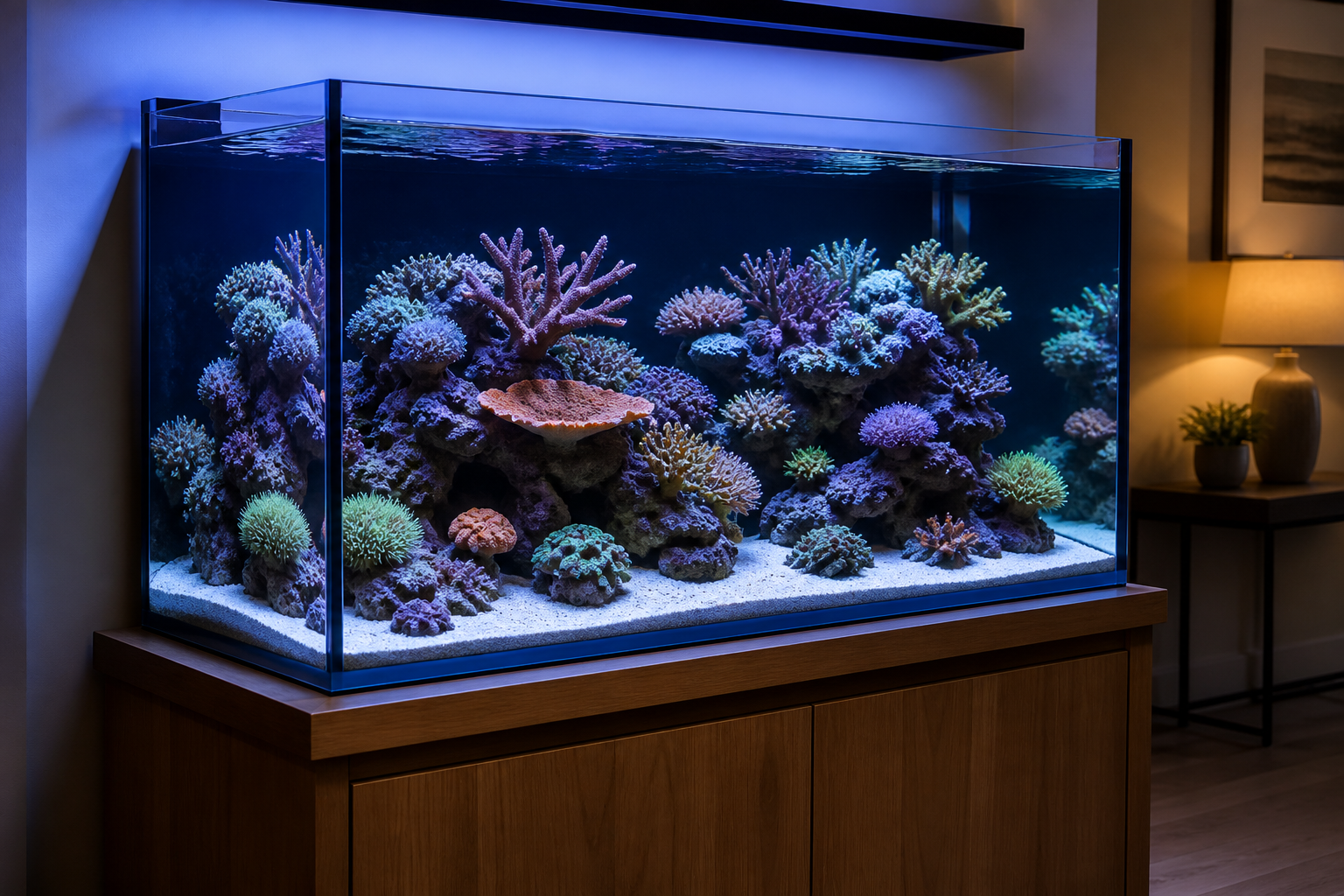
Table of Contents
- Daily Checklist (5 Minutes)
- Weekly Checklist (About an Hour)
- How to Do the Weekly Water Change
- Monthly Checklist
- Every 3 Months
- Your Reef Log Template
- Summer and Holiday Add-Ons
- Maintenance Mistakes to Avoid
- When to Hand It to a Professional
- FAQ
Weekly Reef Tank Maintenance Checklist (Plus Daily, Monthly and Quarterly Tasks)
Daily Checklist (5 Minutes)
The daily check is about spotting trouble early. You are not fixing anything yet, you are looking.
- Temperature: read the thermometer and confirm it is steady, around 24–26°C. A sudden change means a failing heater or a heat spike.
- Water level and salinity: evaporation leaves salt behind, so salinity rises as the level drops. Top off with fresh RO/DI water only, never saltwater, and keep the top-off reservoir filled.
- Corals: are the polyps open, the color normal and the tissue covering the skeleton? Closed polyps for days, fading color or bare patches are early warnings.
- Flow: are all pumps and wave makers running? A silent pump is easy to miss and a dead spot builds waste quickly.
- Skimmer: is the collection cup full or overflowing? Empty it if it is.
- Fish: feed a small amount once or twice, only what is eaten in a couple of minutes, and count the fish while you are there.
- Leaks and electrics: glance at the floor under the stand and the power strips. Salt creep or damp patches are the first sign of a slow leak.
- Lights: confirm the timer is on its normal schedule.
Weekly Checklist (About an Hour)
Pick one fixed day, so the interval between tests and water changes stays the same. This is the heart of reef maintenance.
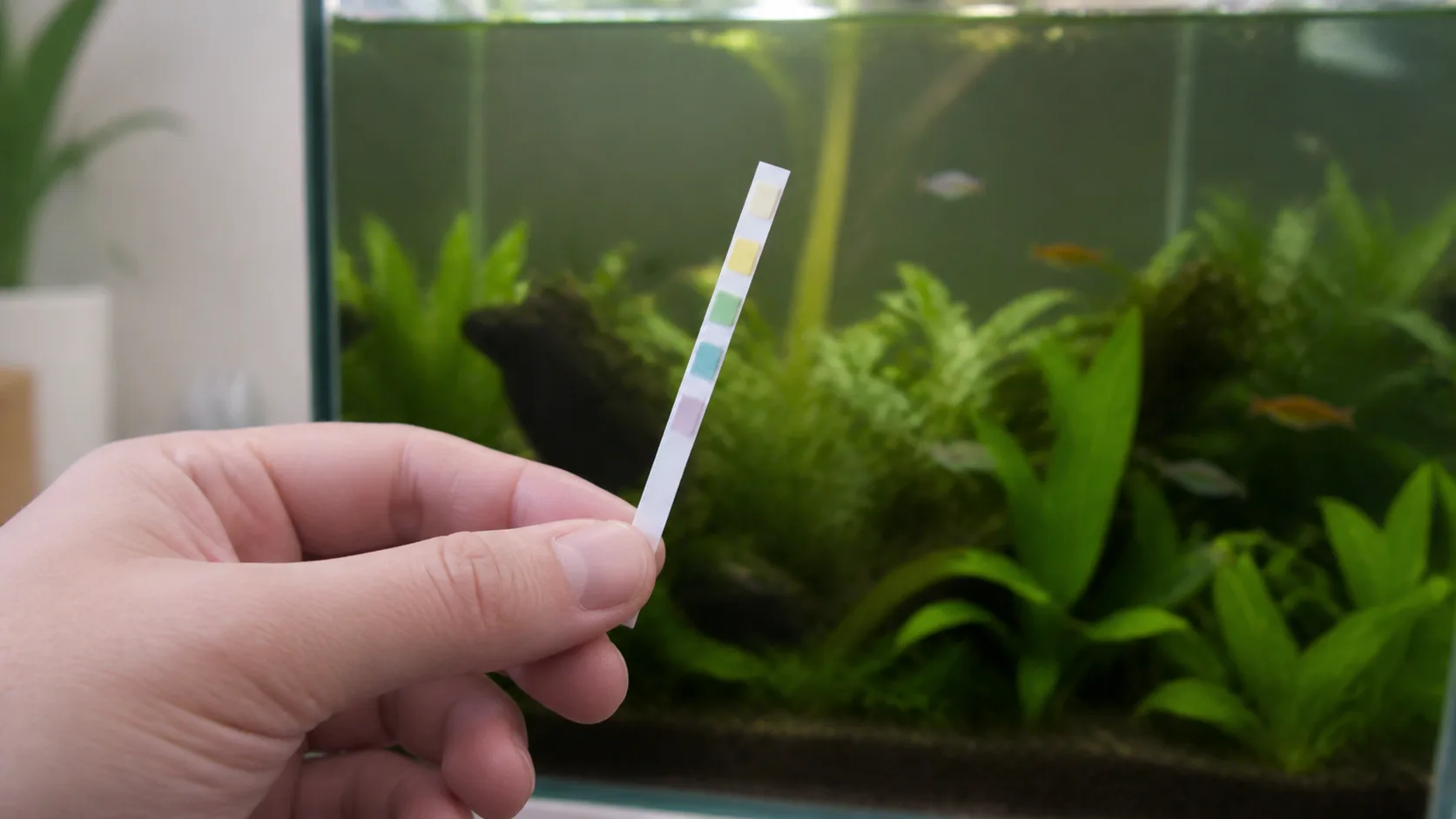
- Test your parameters: salinity, alkalinity, calcium, magnesium, nitrate and phosphate, and record each one. Our reef water chemistry guide has the target ranges and what to do when a number drifts.
- Do the water change: roughly 10–20% of the tank volume with fresh, correctly mixed saltwater (details below).
- Clean the glass: wipe algae from the front and sides, taking care not to trap sand or grit under the scraper, which can scratch the glass.
- Remove detritus: siphon waste from the sand bed surface and from dead spots behind and under rockwork during the water change.
- Skimmer: empty and rinse the collection cup and wipe the inside of the neck if it has a film.
- Filter socks and sponges, if you run them: rinse or replace them. A clogged sock or sponge holds rotting waste and adds nitrate.
- Check equipment: return pump, wave makers, heater, lighting and the top-off system, listening for noise and looking for wear.
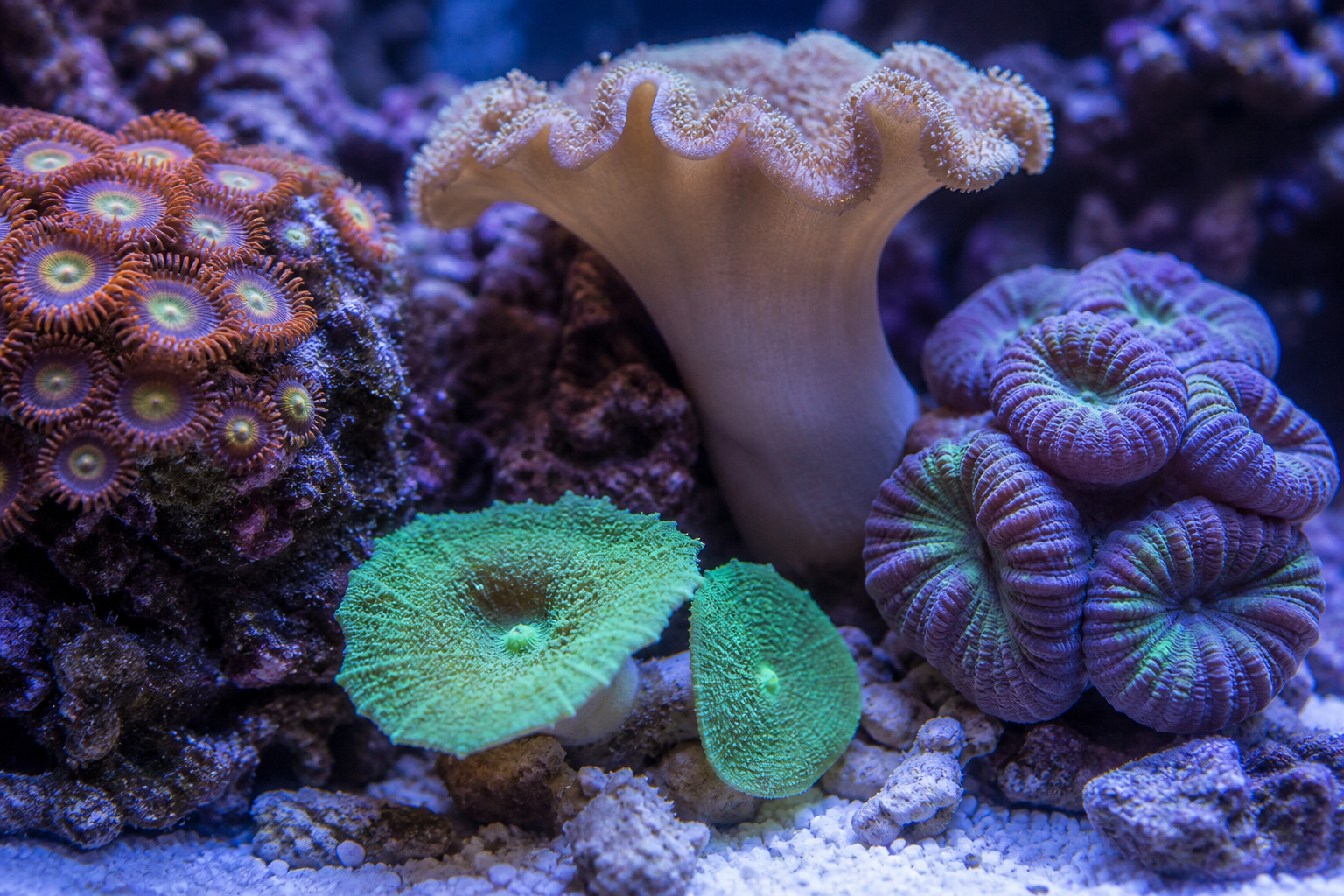
- Look closely at the corals: check for pests, receding tissue and corals that are touching or stinging neighbors, and reposition or trim as needed.
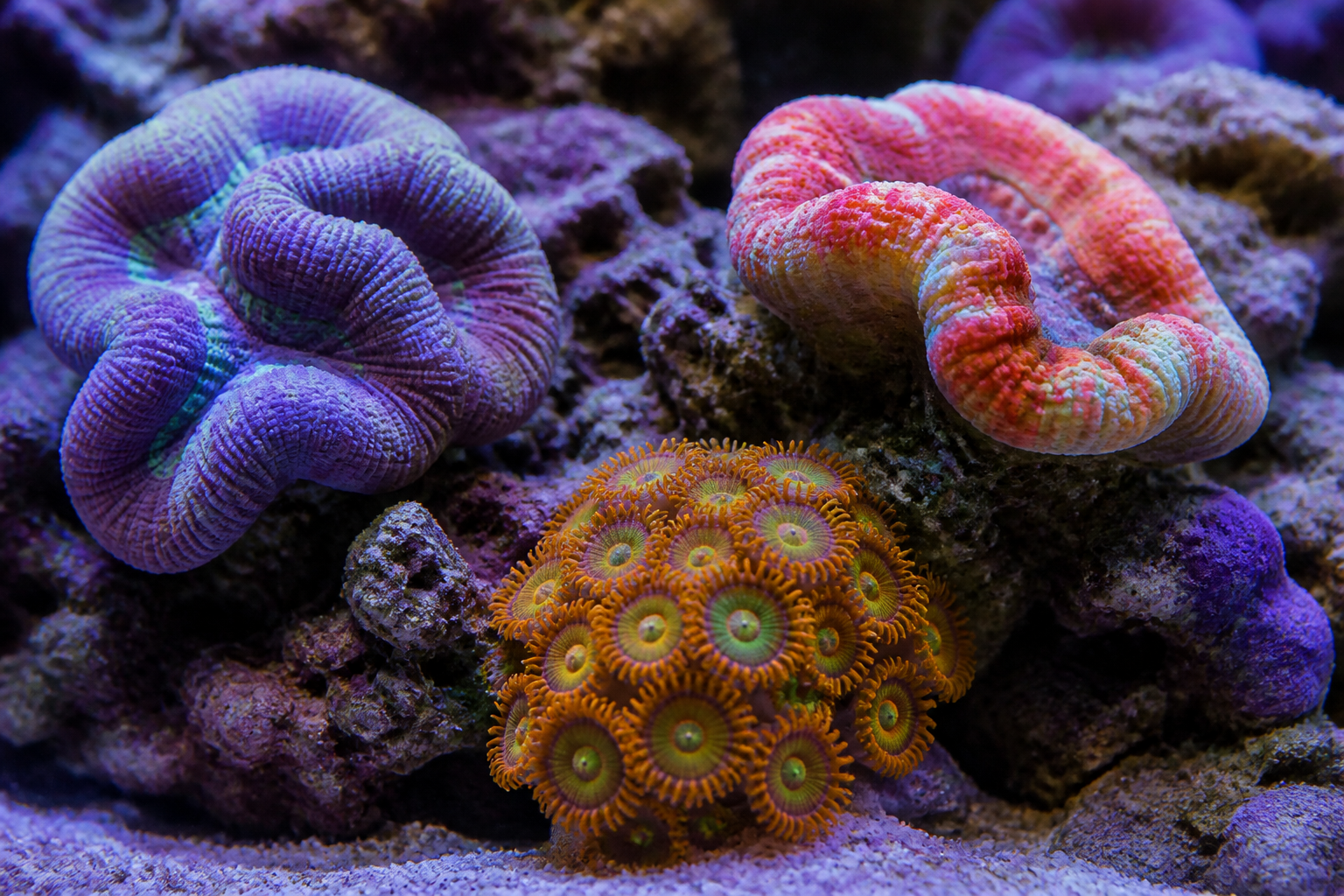
- Spot feed LPS corals: corals such as Lobophyllia benefit from small pieces of mysis or brine shrimp a couple of times a week.
- Update the log: note the readings, what you did and anything you noticed.
How to Do the Weekly Water Change
A good water change replaces used trace elements and exports nitrate and phosphate without shocking anything. The recipe is simple and the details matter.
- Mix new saltwater at least 24 hours ahead: RO/DI water plus reef-grade salt, with a small pump for circulation and a heater to match tank temperature.
- Match the tank: check that the new water is within about 1°C of the tank and at the same salinity, ideally within 0.001 specific gravity.
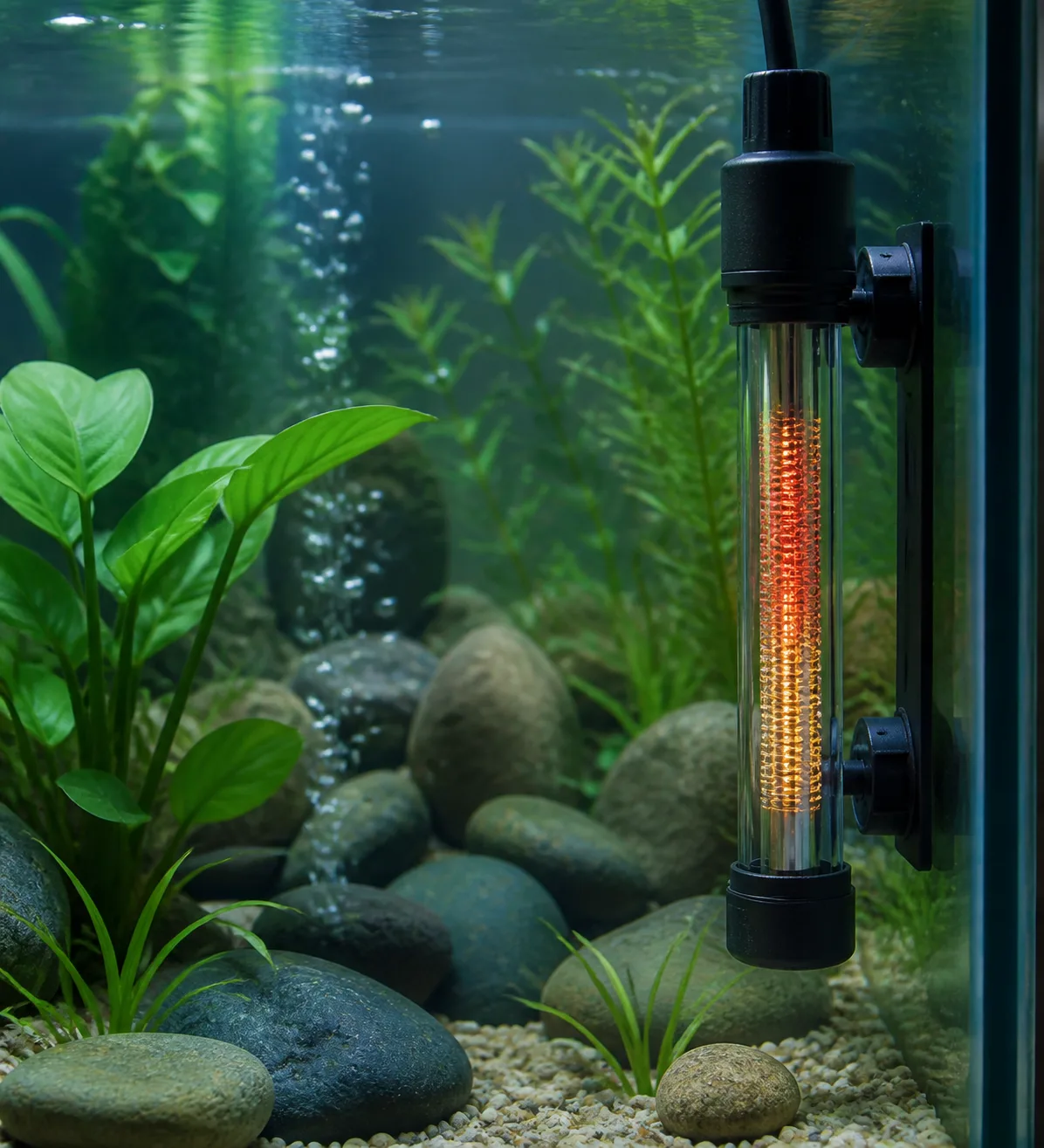
- Unplug the heater before the water level drops, as in any water change. Our heater guide explains why.
- Siphon out the old water from the sand surface and dead spots, taking about 10–20% of the volume.
- Add the new water slowly, onto a plate or into the sump, so you do not blast sand or stress corals.
- Restart equipment and confirm the heater, return pump and skimmer are all running normally.
- Recheck salinity an hour later and adjust gently if it is off.
The general principles are the same as in our water change guide, with the saltwater-specific extras above. A small, regular change beats a big, occasional one every time.
Monthly Checklist
- Deep-clean the skimmer: take it apart, rinse the neck, cup and pump, and clear the air intake, so it keeps pulling waste out efficiently.
- Clean wave makers and pump intakes: algae and slime on propellers and guards reduces flow without you noticing.
- Calibrate the refractometer: use the calibration fluid or fresh RO/DI water at zero, so every salinity reading you take is trustworthy.
- Check test kits: confirm expiry dates and replace tired reagents. Old reagents give wrong readings and wrong readings cause bad decisions.
- Verify the thermometer: compare it against a second thermometer. A drifting thermometer hides a drifting heater.
- Inspect plumbing: check tubing, joints, clamps and check valves for wear and salt creep.
- Clean the lights: wipe salt spray and dust from lenses and covers so light output stays consistent.
- Prune and frag corals: trim growth that is shading or crowding neighbors, and wear gloves and eye protection when handling zoanthids.
Every 3 Months
- Deep-clean the return pump: remove the impeller and clear built-up deposits, which can slow flow and overheat the motor.
- Replace worn parts: tubing, airline, sponges, and any consumable media you use.
- Review your log: look at three months of readings for slow trends, such as alkalinity creeping down or nitrate creeping up, and adjust your routine to fit.
- Check the heater and backups: confirm a spare heater, spare pump and spare thermometer are on hand.
- Test electrical safety: check cables for damage and confirm power outlets near the tank are protected and kept dry.
Your Reef Log Template
Copy this into a notebook or spreadsheet and fill one row each week. The goal is a record, not a perfect score.
| Date | Temp | Salinity | Alk | Ca | Mg | NO3 | PO4 | Change % | Notes |
|---|---|---|---|---|---|---|---|---|---|
Reference targets for the columns: temperature 24–26°C, salinity about 1.025, alkalinity about 8–11 dKH, calcium about 400–450 ppm, magnesium about 1,250–1,350 ppm, nitrate roughly 2–10 ppm and phosphate roughly 0.01–0.08 ppm.
Summer and Holiday Add-Ons
Hot Months
Evaporation climbs and warm water holds less oxygen, so a reef can go wrong fast. In summer, check the temperature morning and evening, top off daily, and watch salinity more closely. Cool the room or the tank before the first heatwave, as covered in How to Cool Your Aquarium in Summer Heat. Evaporative fans help but raise evaporation, so top-off discipline matters even more.
Before You Travel
- Do a water change and full test two or three days before leaving, so the tank starts the trip in good shape.
- Fill the top-off reservoir, check the float switch and clean the skimmer cup.
- Use an automatic feeder or a trusted helper, and keep feeding light. A fasting fish is safer than a polluted tank.
- Leave your helper this checklist, the emergency contacts and a note on what to do if the power goes out.
- Do not make big changes right before you go. Stable beats improved.
Maintenance Mistakes to Avoid
- Skipping the log: without records, a slow drift looks like a sudden crash.
- Topping off with saltwater or tap water: use fresh RO/DI water only.
- Cleaning everything at once: scrubbing the glass, rinsing the sponge, cleaning the skimmer and changing water in one session can upset the biological balance. Spread heavy tasks across the week.
- Over-correcting numbers: chasing a perfect reading with large doses causes more harm than a steady reading that is slightly off.
- Ignoring small changes: a coral that has been closed for three days is trying to tell you something.
- Neglecting the skimmer and pumps: dirty equipment quietly stops doing its job while the tank looks fine.
When to Hand It to a Professional
Not everyone has an hour a week, or the confidence to run chemistry tests alone, and that is fine. A specialist visit covers the same ground as this checklist: parameter testing, a water change of up to 20% with salinity-matched saltwater, glass and substrate cleaning, skimmer and filter care, an equipment check and a look at your fish and corals, with a report after every visit.
Even if you hire help, learn the daily check. You are the one who sees the tank every day.
Frequently Asked Questions
Many keepers change roughly 10–20% weekly or every two weeks. What matters most is a regular schedule and water that matches the tank’s temperature and salinity.
About 5 minutes a day and about an hour a week for a typical tank, plus a little extra monthly and quarterly. Larger tanks and heavier stocking take longer.
Salinity, alkalinity, calcium, magnesium, nitrate and phosphate. Test alkalinity more often if you keep stony corals.
No. Use fresh RO/DI water for top-off. Tap water adds phosphate, silicate and chlorine that feed algae and harm corals.
Empty the collection cup as it fills, usually a few times a week, and give the skimmer a full clean about once a month.
Yes. A log shows slow trends before they become emergencies and makes troubleshooting far easier.
Do not double up on everything at once. Test first, then do a normal-sized water change and return to your schedule.
Conclusion
Five minutes a day, an hour a week, and a log you actually fill in. That routine, kept steady, prevents the vast majority of reef emergencies and gives your corals the stable home they need to grow.
Recommended Products
- Marine & Reef Aquarium Maintenance
- Bubble Magus Curve 5 Protein Skimmer
- Jebao RW-4 Wave Maker Pump
- Aquarium Cooling Fan Set
- Hikari Marine S
Related Articles
- Reef Water Chemistry Explained: Alkalinity, Calcium and Magnesium
- Saltwater Reef Tank Setup Guide: From Empty Glass to First Coral
- Coral Care 101: Types of Reef Corals and How to Keep Them Thriving
- Best Beginner Corals for Your First Reef Tank
- How Often Should You Change Your Aquarium Water?
- How to Cool Your Aquarium in Summer Heat