

 Smart Control Systems
 Lighting
 Filtration
 Heaters
 Chiller & Cooling Fans
 Thermometers
 Water Pumps
 Air Pumps
 Wavemaker


 Low-Tech Plants
 Medium-Tech plants
 High-Tech Plants

 CO2 Diffusers


 Soil & Substrate
 Driftwood & Rocks
 Caves & Clays
 Filter Media, Sponge & Replacement Parts
 Tubing & Connectors



Betta Fish Tank Setup Guide

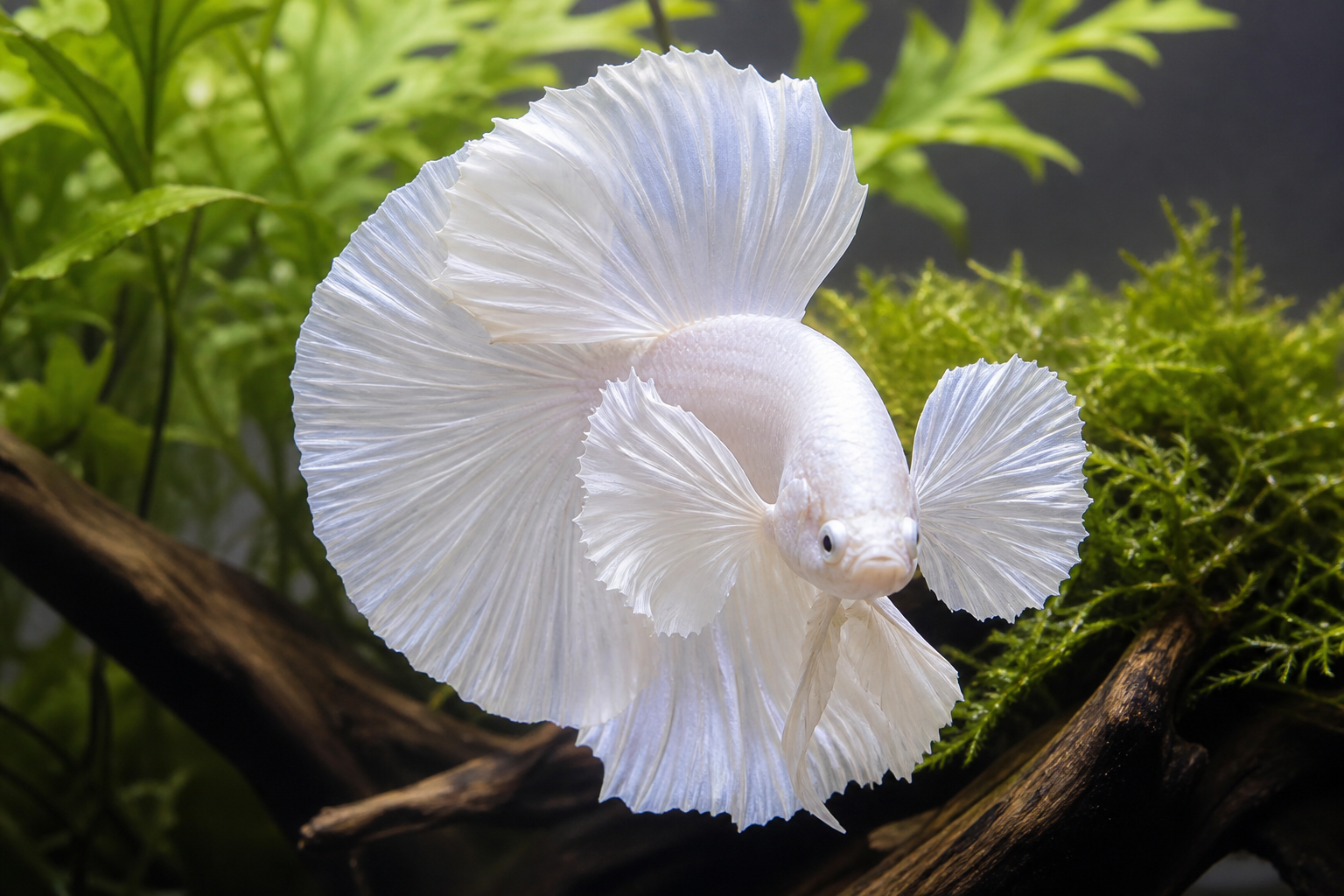
Betta fish get sold as a “starter fish for a small bowl,” and that reputation causes more suffering than almost any other piece of aquarium misinformation. A betta is a tropical fish that needs the same core things any tropical fish needs — stable warm water, filtration, and enough space to actually swim — just scaled to a smaller footprint than a community tank.
Table of Contents
- The Bowl Myth
- Choosing the Right Tank Size
- Essential Equipment
- Tankmates: What Actually Works
- Feeding a Betta
- Common Betta-Keeping Mistakes
- FAQ
Betta Fish Tank Setup Guide
The Bowl Myth
In the wild, bettas live in shallow rice paddies and slow-moving streams in Southeast Asia — not stagnant puddles. They can gulp air at the surface thanks to a labyrinth organ, which is exactly why the bowl myth took hold: bettas can technically survive in low-oxygen water longer than most fish. Surviving is not the bar. A proper heated, filtered, appropriately sized tank is the difference between a betta that merely survives and one that displays full fin spread, active color, and natural behavior for years.
Choosing the Right Tank Size
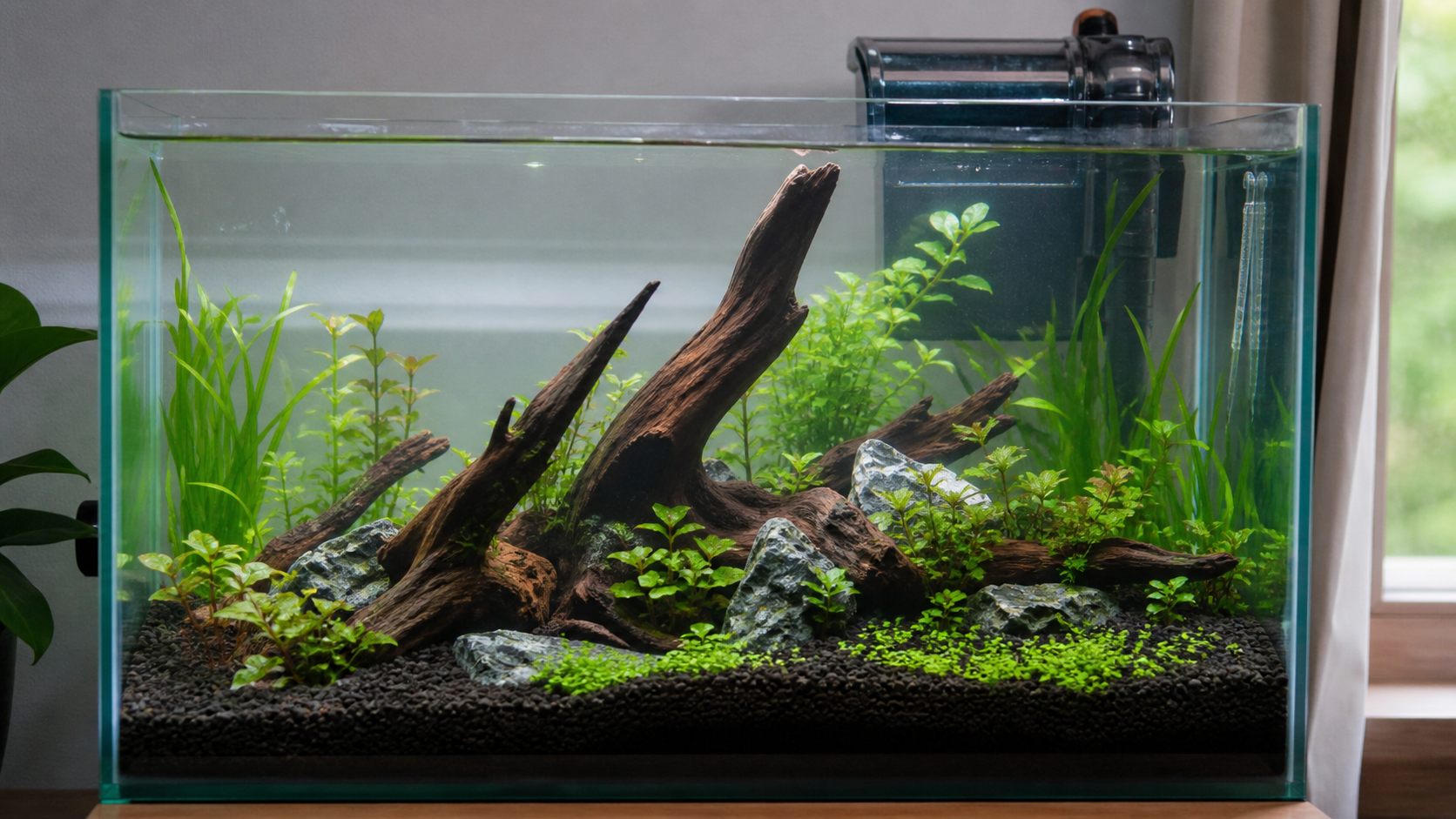
10 liters is the practical minimum, and every liter above that makes the water more stable and the betta noticeably more active. In a tank this size, temperature and ammonia both swing far less per mistake than in a true bowl, and there’s enough swimming room for a betta to actually patrol and explore rather than just hover in place.
Essential Equipment
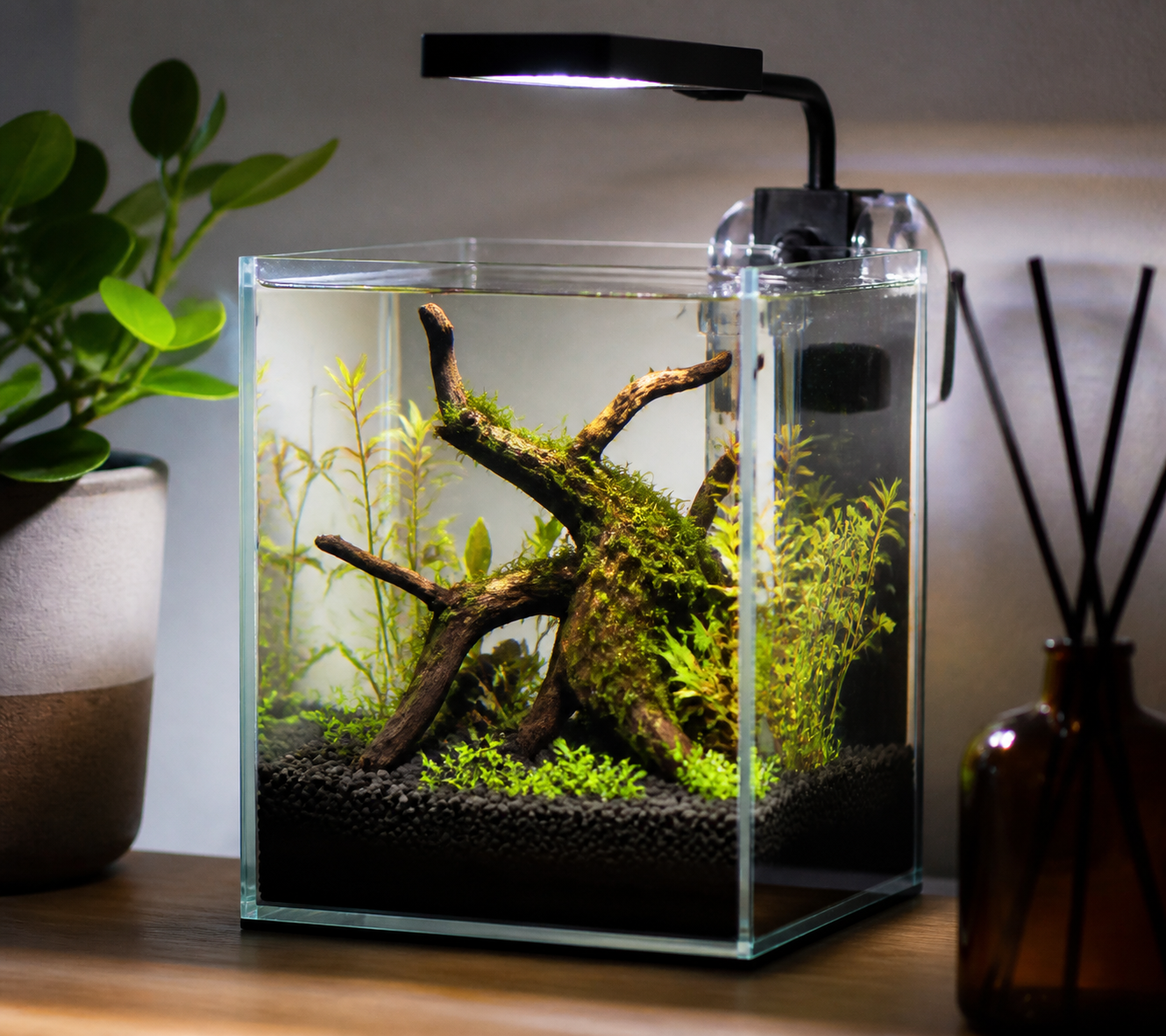
- A properly sized tank with a secure, gap-free lid — bettas are strong, surprising jumpers.
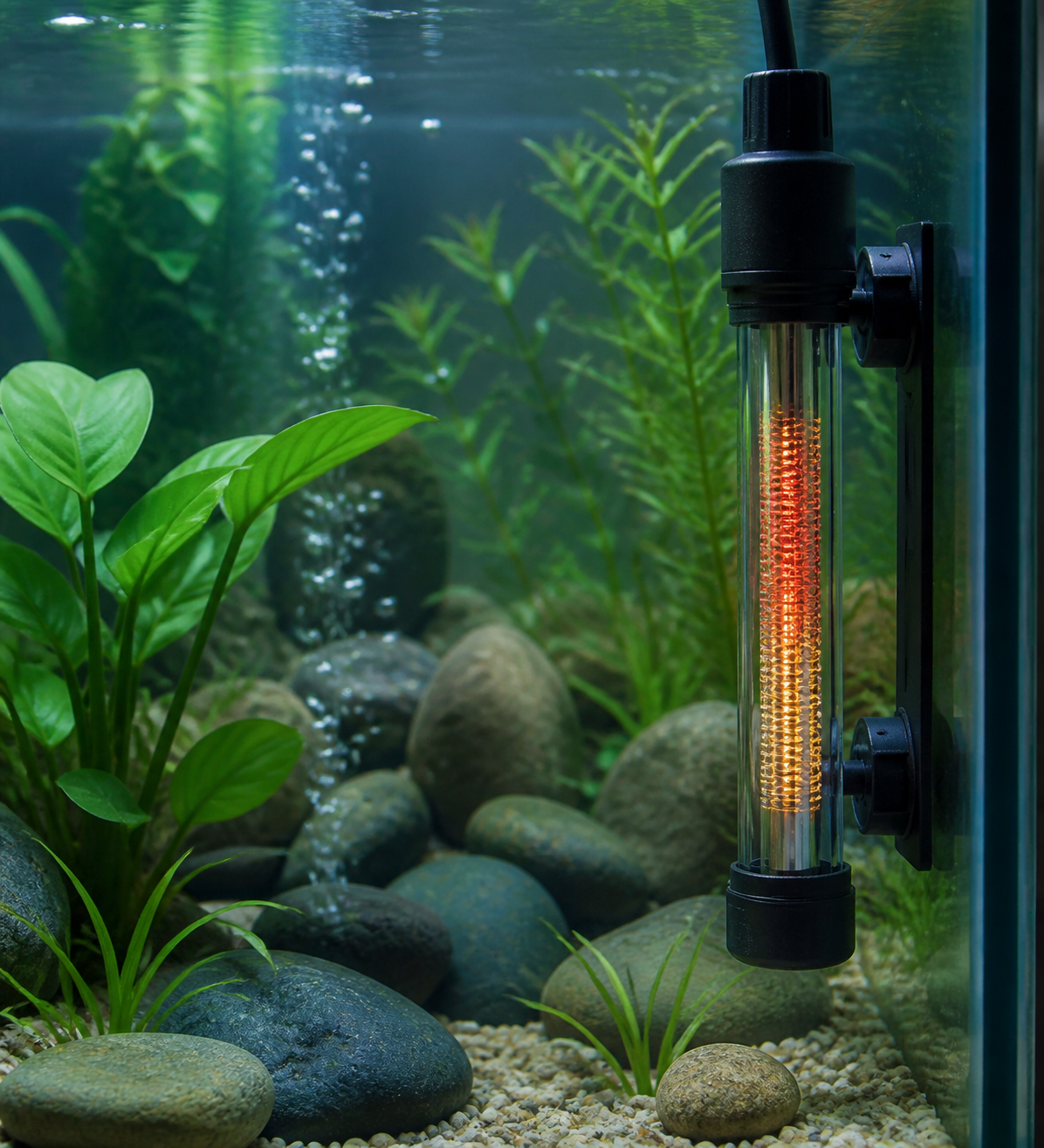
- A nano heater to hold a stable 24–27°C — betta metabolism and immune function both suffer in cold or swinging water.
- Gentle filtration — a betta’s long, heavy fins make strong current genuinely exhausting to swim against; look for a filter with adjustable or naturally low flow rather than a standard hang-on-back rated for a much larger tank.
- Soft, low-intensity lighting — bettas don’t need bright reef-style lighting, and a softer LED suits both the fish and any low-light plants you add.
- A water conditioner for every water change, exactly as with any other freshwater fish.
Tankmates: What Actually Works
Many bettas do fine completely alone in a species-only tank, and that’s always the safest default, especially for a first betta. If you want tankmates, avoid anything with long, flowing fins or bright colors that can trigger a betta’s territorial instinct (other bettas, guppies, fancy-tailed fish), and avoid notorious fin-nippers (tiger barbs, some tetra species). Bottom dwellers that stay out of a betta’s space — nerite snails, a small group of peaceful corydoras in a large-enough tank — tend to work better than anything sharing the same water column.
Feeding a Betta
Bettas are carnivores in the wild, feeding on insects and larvae — a high-protein pellet formulated specifically for bettas is a better staple than generic flake food. Feed a small amount once or twice daily, only what’s eaten within 1–2 minutes; bettas are prone to bloat and constipation from overfeeding more than most community fish.
Common Betta-Keeping Mistakes
- No heater — the single most common and most damaging betta-keeping mistake, based directly on the bowl myth.
- Too much current from an oversized filter, leaving a betta struggling to swim rather than resting comfortably.
- Housing two males together, or introducing tankmates that nip at long fins.
- Overfeeding, leading to bloating and swim bladder issues.
- No lid — betta jumps are a leading, easily preventable cause of accidental death.
Frequently Asked Questions
It can survive short-term thanks to its labyrinth organ, but “surviving” isn’t the standard — a proper heated, filtered tank is the difference between a stressed fish and a thriving one.
Yes — just a gentle one. Skipping filtration entirely means ammonia builds up fast in a small volume, exactly the mistake that makes unfiltered betta bowls so risky.
Two males, never. Females can sometimes cohabit in a much larger, carefully planned “sorority” tank with plenty of hiding spots, but it’s an advanced setup, not a beginner one.
24–27°C, the same tropical range as most common community fish — a heater is not optional.
This is often swim bladder distress from overfeeding, or a sign of poor water quality — check temperature and ammonia/nitrite first before assuming illness.
Yes — plants (live or soft silk) and hiding spots reduce stress and give a betta somewhere to rest just under the surface, which they do naturally.
Conclusion
A betta kept the right way — a real tank, a heater, gentle filtration, and a sensible feeding routine — is a genuinely hardy, long-lived, expressive fish. The bowl myth is responsible for more suffering than any single piece of misinformation in the hobby, and it costs almost nothing extra to do it properly from day one.
Recommended Products
- Acrylic Betta Fish Tank Cube
- XiLong USB Mini Heater (15W)
- Mushroom Nano Filter + LED Combo
- Seachem Safe Water Conditioner