

 Smart Control Systems
 Lighting
 Filtration
 Heaters
 Chiller & Cooling Fans
 Thermometers
 Water Pumps
 Air Pumps
 Wavemaker


 Low-Tech Plants
 Medium-Tech plants
 High-Tech Plants

 CO2 Diffusers


 Soil & Substrate
 Driftwood & Rocks
 Caves & Clays
 Filter Media, Sponge & Replacement Parts
 Tubing & Connectors



How Often Should You Change Your Aquarium Water? The Complete Guide

Water changes are the single habit that keeps an aquarium healthy — more than any filter, gadget, or product on the shelf. Skip them and waste builds up quietly until fish start gasping at the surface or algae takes over. Get the routine right, and most common aquarium problems simply never happen.
Table of Contents
- Why Water Changes Matter
- How Often Should You Change the Water?
- How Much Water Should You Change?
- Step-by-Step: How to Do a Water Change
- Why You Need a Dechlorinator (Never Skip This)
- Common Water Change Mistakes
- Signs Your Tank Needs a Water Change Now
- FAQ
How Often Should You Change Your Aquarium Water? The Complete Guide
Why Water Changes Matter
Fish waste, uneaten food, and decaying plant matter constantly release ammonia and, eventually, nitrate into the water. Your filter’s beneficial bacteria convert ammonia into nitrite and then into nitrate — but nitrate itself doesn’t disappear on its own. It just accumulates. The only way to remove it is to physically take out a portion of the water and replace it with fresh, treated water.
Beyond nitrate, water changes also replenish trace minerals and buffering capacity (KH) that plants and fish slowly use up, and they dilute dissolved organic compounds that make water look yellow or “old” over time. We think of it less as a chore and more as the tank’s version of changing the oil in a car — skip it long enough and everything downstream gets harder.
How Often Should You Change the Water?
There’s no single number that fits every tank, but these starting points work well for almost any freshwater setup:
- New tanks (first 6–8 weeks): 20–25% weekly while the bacterial colony is still establishing.
- Established, moderately stocked tanks: 25–30% every 1–2 weeks.
- Heavily stocked tanks (lots of fish, small tank): 30–40% weekly.
- Lightly stocked, heavily planted tanks: can often stretch to every 2 weeks, since plants absorb a share of the nitrate.
- Shrimp-only tanks: smaller, more frequent changes (10–15% weekly) — shrimp are far more sensitive to sudden parameter swings than fish.
How Much Water Should You Change?
25–30% is the sweet spot for routine maintenance — enough to meaningfully dilute nitrate and refresh trace elements, without shocking fish with a sudden shift in temperature or chemistry. Avoid changing more than 50% at once on an established tank unless you’re dealing with an emergency (ammonia spike, medication removal) — large swings stress fish and can even trigger a mini-cycle if you disturb too much of the substrate and filter media at once.
Step-by-Step: How to Do a Water Change
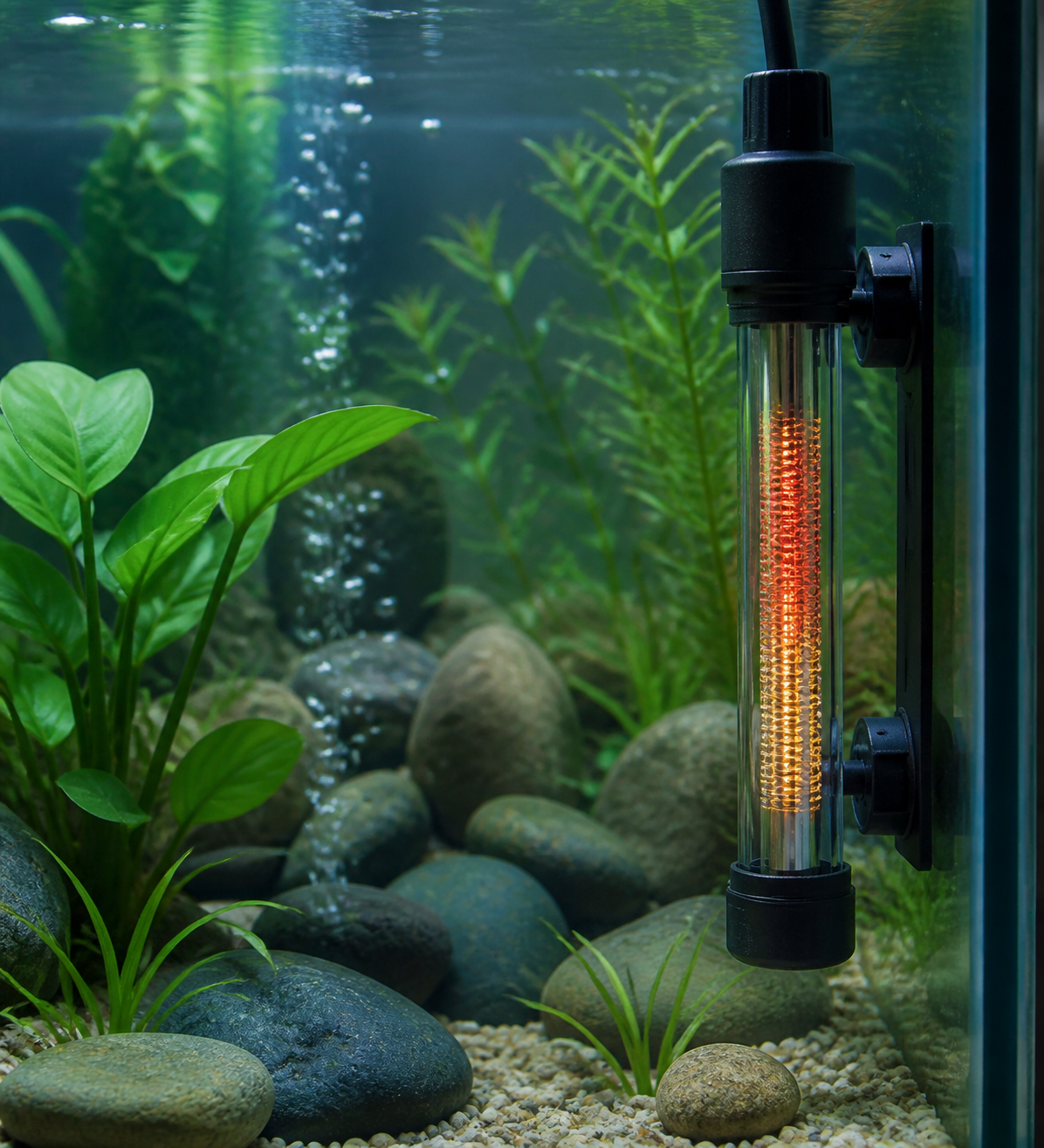
- Unplug the heater before you start, so it doesn’t run dry and burn out or crack from temperature shock.
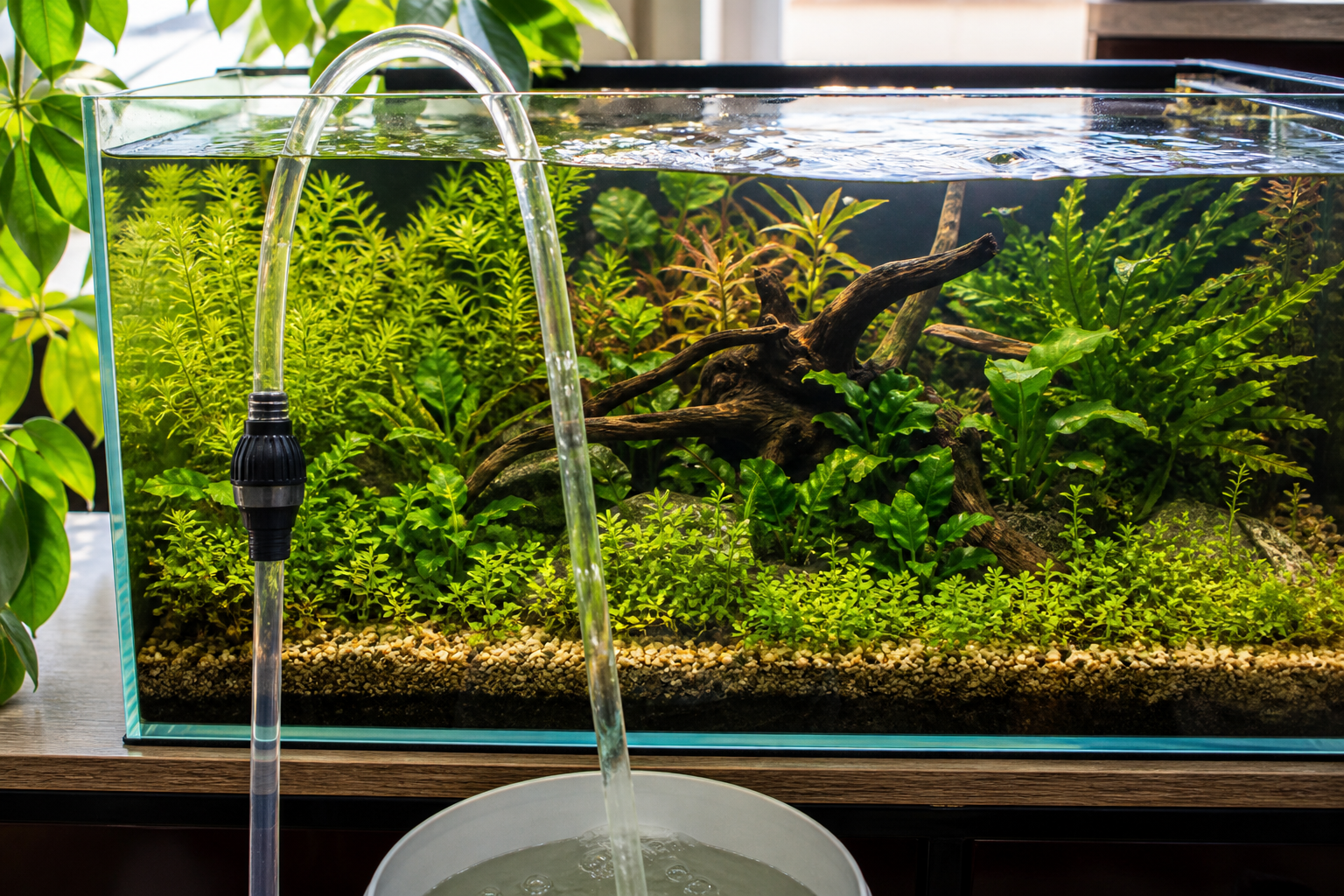
- Use a gravel vacuum/siphon to pull water out while simultaneously vacuuming debris from the substrate — this is where most of the actual waste is hiding, not floating in the water column.
- Remove 25–30% of the tank volume into a bucket, working in sections across the substrate over multiple weeks rather than trying to vacuum the whole tank in one session.
- Fill your replacement water to roughly the same temperature as the tank (within 2–3°C) to avoid thermal shock.
- Treat the new water with a dechlorinator before it goes into the tank — see the section below, this step is non-negotiable.
- Pour the treated water back in slowly, ideally against the glass or a decoration to avoid blasting substrate or stressing fish with a sudden current.
- Plug the heater back in and confirm the filter is still running normally.
Why You Need a Dechlorinator (Never Skip This)
Tap water in Egypt and almost everywhere else is treated with chlorine or chloramine to make it safe to drink — both are toxic to fish and to the beneficial bacteria living in your filter. Adding untreated tap water directly to your tank can burn fish gills and wipe out your biological filtration in one move, triggering an ammonia spike days later that looks like a mystery illness but is really a self-inflicted mini-cycle.
A water conditioner (dechlorinator) neutralizes chlorine and chloramine instantly and also detoxifies any heavy metals in tap water. It takes seconds to dose and costs far less than losing fish or having to re-cycle a tank.
Common Water Change Mistakes
- Skipping the dechlorinator — the single most damaging shortcut on this list.
- Changing too much water at once — big swings in temperature or chemistry stress fish more than the nitrate you’re removing.
- Only cleaning the water, never the substrate — most waste settles into the gravel, not the water column.
- Rinsing filter media in tap water — chlorine kills the beneficial bacteria living on it; always rinse media in removed tank water instead.
- Skipping water changes because parameters “look fine” — nitrate accumulation is gradual and often invisible until it’s already high.
Signs Your Tank Needs a Water Change Now
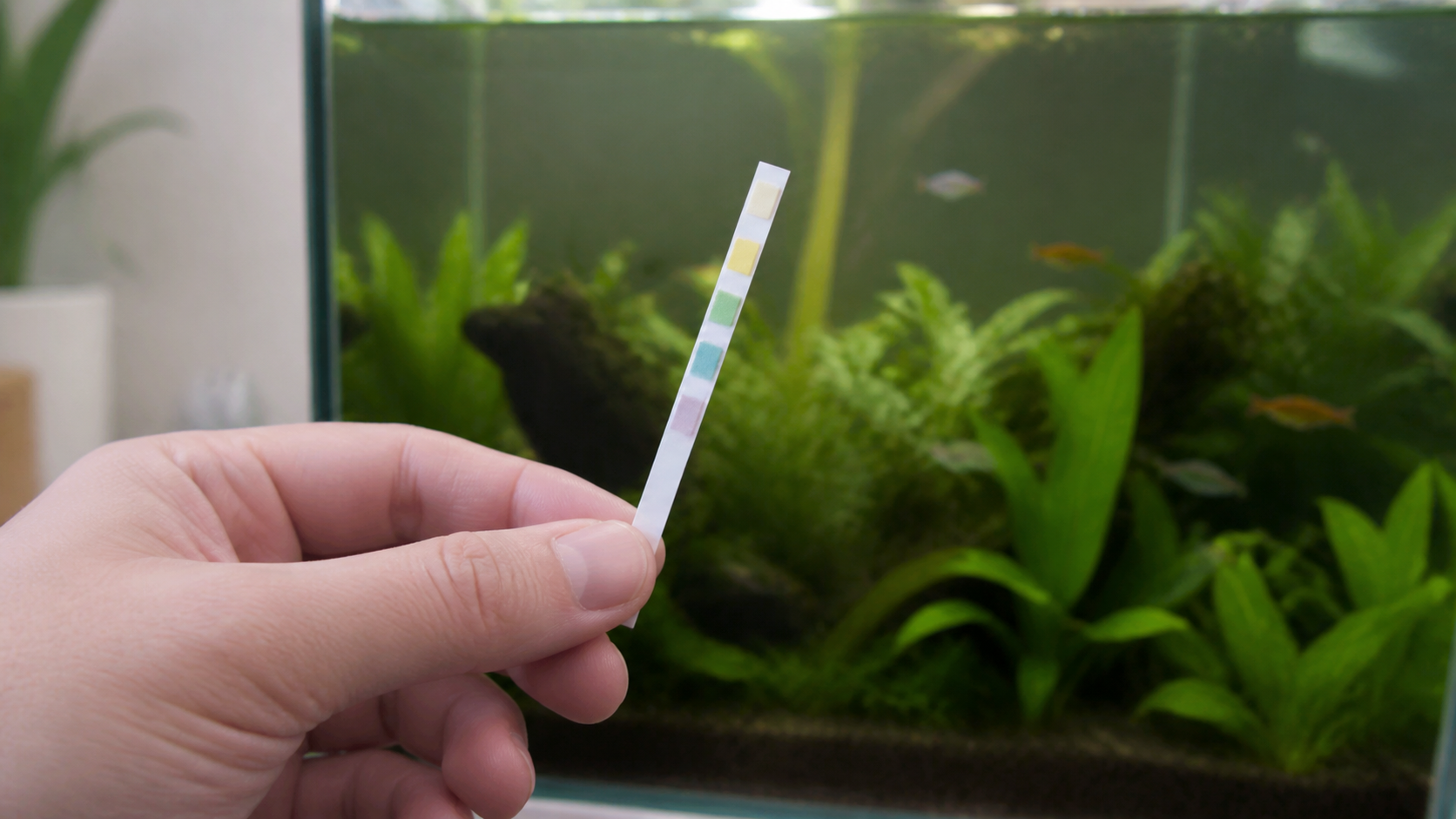
Beyond your regular schedule, do an extra water change right away if you notice: a strong ammonia or nitrite reading on a test kit, cloudy or yellow-tinted water, fish gasping at the surface, a sudden algae bloom, or a noticeable smell coming from the tank. See our Water Parameters 101 guide for how to test and read these numbers accurately.
Frequently Asked Questions
Not really from a waste-removal standpoint, but changing water too often with fresh conditioner-treated water is harmless — the actual risk is stress from repeated handling and temperature swings, not the water itself.
Yes. Plants absorb some nitrate but not all of it, and they don’t remove other dissolved organics or replenish trace minerals the way a water change does.
Letting water sit removes chlorine gas but not chloramine, which many municipal systems use instead. Always use a dechlorinator rather than relying on sitting time.
Yes, but it strips out minerals fish and plants need, so it should be remineralized before use — straight RO/distilled water is not a drop-in replacement for conditioned tap water.
Usually it’s a bacterial bloom triggered by disturbing the substrate, or fine particulate stirred up by the gravel vacuum — it typically clears within 24–48 hours on its own.
No, leave it running — it only needs to be paused if the water level drops below the intake. Do unplug the heater, though.
Conclusion
A consistent 25–30% water change every 1–2 weeks, paired with a proper dechlorinator every single time, prevents the vast majority of beginner aquarium problems before they start. It’s the least glamorous part of the hobby and the most important one.
Recommended Products
- Seachem Safe (concentrated powder conditioner)
- Shield Plus (liquid conditioner + slime coat)
- Crystalline Chlorine Remover Granules