
 Discus
 Cichlids
 Angelfish
 Plecos & Catfish
 Community & Nano Fish
 Shrimp, Snails & Invertebrates

 Low-Tech Plants
 Medium-Tech plants
 High-Tech Plants

 Live Corals


 Terrarium Kits & Jars
 Terrarium Plants & Moss
 Bioactive Clean-up Crew


 Smart Control Systems
 Lighting
 Filtration
 Heaters
 Chiller & Cooling Fans
 Thermometers
 Air Pumps
 Wavemaker
 Protein Skimmer

 CO2 Diffusers
 CO2 Accessories & Drop Checkers
 Liquid Carbon & CO2 Alternatives





 Soil & Substrate
 Driftwood & Rocks
 Caves & Clays

 Filter Media, Sponge & Replacement Parts
 Tubing & Connectors






Oscar Fish Care Guide: Tank Size, Diet, and Tankmates

Oscar Fish Care Guide: Tank Size, Diet, and Tankmates
Table of Contents
- Why Oscars Are Different From a Typical Community Fish
- Tank Size: Plan for the Adult, Not the Juvenile
- Water Parameters and Filtration
- Diet: What Oscars Actually Need to Eat
- Tankmates: What Genuinely Works
- Behavior and Personality
- Growth Rate and Lifespan
- Common Beginner Mistakes
- Frequently Asked Questions
Why Oscars Are Different From a Typical Community Fish
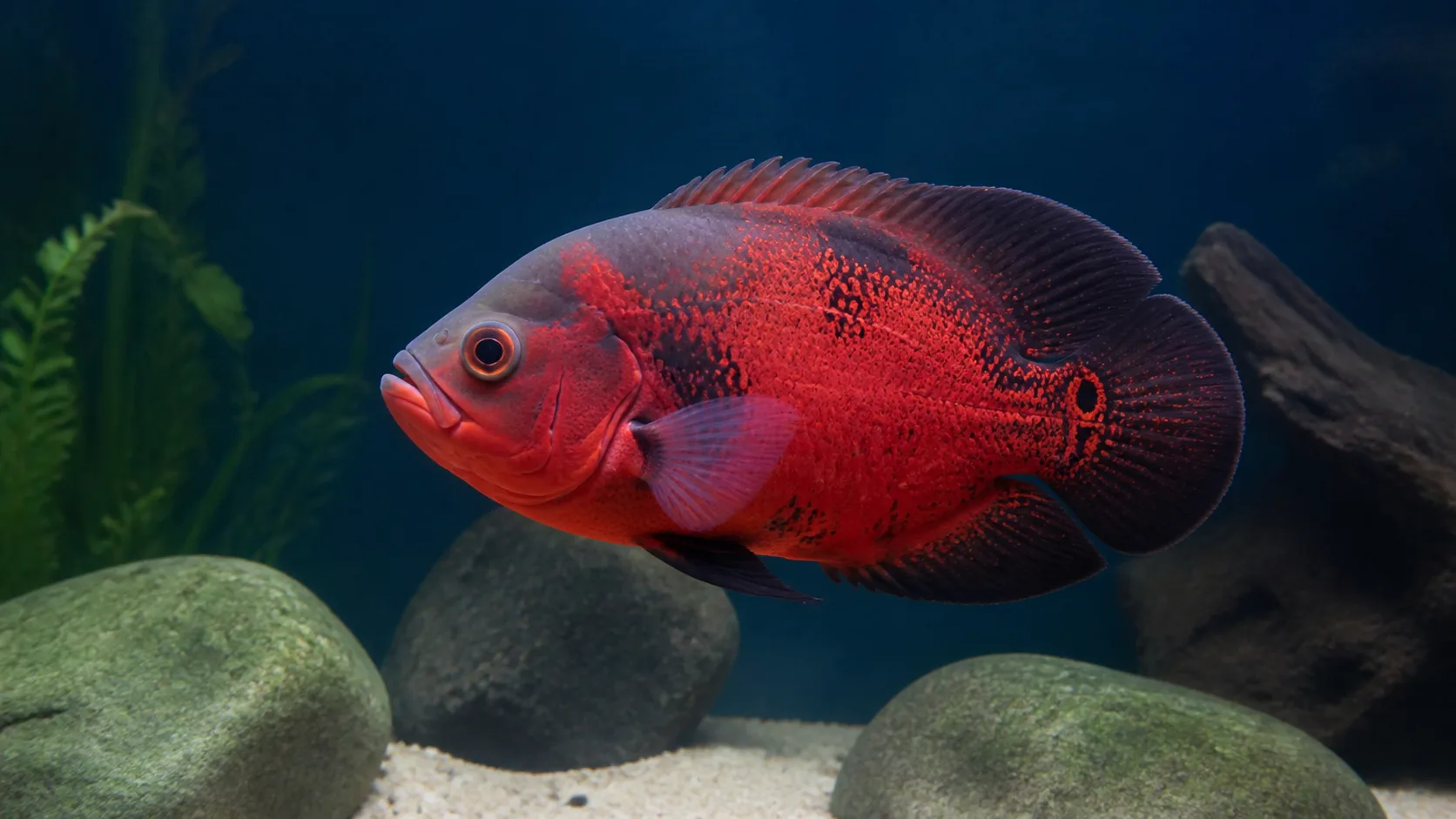
Oscars (Astronotus ocellatus) are large, intelligent South American cichlids known for recognizing their owners, “asking” for food, and displaying genuine personality in a way few other freshwater fish do — which is exactly why they’ve built such a dedicated following despite being a genuinely demanding fish to keep properly. The catch is that everything about keeping an Oscar well is scaled to their adult size and territorial nature, not the small, calm juvenile most people bring home.
A young Oscar a few centimeters long gives almost no indication of the 30+ centimeter, strongly territorial adult it becomes within a year or two — which is exactly why so many Oscars end up outgrowing tanks that seemed spacious at purchase time.
Tank Size: Plan for the Adult, Not the Juvenile
A single adult Oscar genuinely needs a large tank — most experienced keepers recommend at least 200 liters (roughly 55 US gallons) as an absolute minimum, with larger being meaningfully better for the fish’s long-term health and behavior. If you’re planning tankmates or a second Oscar, scale up further: a spacious tank gives each fish enough territory to establish its own space without constant conflict.
Recommended Products
- 60×60×60cm Aquarium with Sump and Wooden Stand — a genuinely large, ready-to-run setup sized appropriately for an adult Oscar
Water Parameters and Filtration
Oscars are relatively adaptable within a normal tropical freshwater range — a temperature around 23–27°C and a pH between 6.5 and 7.5 works well for most specimens — but they’re messy, heavy-bodied fish that produce a substantial bioload, and filtration needs to be scaled to match. Undersized filtration is one of the most common reasons an otherwise well-kept Oscar develops chronic water quality problems.
Because Oscars grow large and eat a protein-heavy diet, plan for filtration well above the standard turnover guideline for a tank of the same size housing smaller fish — a single small filter rated for a community tank of the same volume typically isn’t enough. Running two hang-on-back filters, or upgrading to a canister filter once your tank size calls for it, gives Oscars the biological capacity their bioload actually demands.
Diet: What Oscars Actually Need to Eat
Oscars are omnivores with a strong appetite, doing best on a varied diet built around a quality cichlid pellet as the staple, supplemented with occasional protein like frozen or live foods. A varied diet supports better color, growth, and long-term health than any single food fed exclusively, and also reduces the risk of nutritional deficiencies that show up over a long lifespan.
Overfeeding is a bigger practical risk than underfeeding with Oscars, since their eager begging behavior at the glass makes it easy to feed far more than they actually need — which directly degrades water quality and contributes to obesity over time. Feed an appropriately-sized portion once or twice daily rather than free-feeding whenever the fish appears interested.
Tankmates: What Genuinely Works
Oscar tankmates need to check three boxes: large enough not to be seen as food, robust enough to handle Oscar-level boldness without being bullied into hiding permanently, and not so aggressive themselves that they turn territorial disputes into serious injury. Small, delicate, or slow-moving fish are consistently a poor match — tetras, small rasboras, shrimp, and similar community fish are realistically at risk of being eaten rather than coexisting.
Other large, robust South American cichlids of a similar size and temperament, and larger plecos that can hold their own without competing directly for territory, tend to be the most realistic tankmate options — always in a tank sized generously enough that territorial disputes have room to resolve without a cornered fish.
Behavior and Personality
Oscars are genuinely intelligent by fish standards — they learn to recognize their owner, respond to feeding routines, and sometimes rearrange tank decor to suit their preferences, which is part of why they’re such a beloved species despite the demanding care requirements. They’re also diggers, so expect substrate and lightweight decor to move around, and secure any decorations that could topple or crack the glass if shifted forcefully.
Color and pattern intensity often shifts noticeably with mood, health, and water quality — a stressed or unwell Oscar frequently darkens or loses vibrancy well before other symptoms appear, which makes color change a genuinely useful early warning sign for an attentive keeper, not just a cosmetic detail. Get to know each fish’s normal color and pattern when healthy, since that baseline makes a real change much easier to spot.
Growth Rate and Lifespan
Oscars grow quickly in their first year or two — a juvenile a few centimeters long can reach half its adult size within the first six months under good conditions, which is exactly why upgrading to an appropriately large tank early, rather than waiting to “see how big it gets,” avoids a stressful and disruptive re-homing later. Growth naturally slows once a fish approaches its adult size, but a well-cared-for Oscar keeps growing gradually for several years.
With consistent water quality, adequate space, and a varied diet, a 10 to 15 year lifespan is realistic and not unusual — making an Oscar a genuine long-term commitment on the scale of many small pets, not a short-lived novelty fish. Factor that lifespan into any tank and stocking decisions you make now, since the setup needs to remain appropriate for a decade or more, not just the first year.
Common Beginner Mistakes
- Buying an Oscar for a tank sized for its current juvenile size rather than its adult size
- Underestimating filtration needs relative to an Oscar’s bioload
- Housing an Oscar with small, delicate fish that end up as food
- Overfeeding in response to eager begging behavior at the glass
- Relying heavily on feeder fish instead of a varied, nutritionally complete diet
- Pairing an Oscar with another highly aggressive species like a Red Devil Cichlid
- Leaving loose, unsecured decor in a tank with a digging, rearranging Oscar
Frequently Asked Questions
How big do Oscars actually get?
Most Oscars reach 30 centimeters or more as adults, with some individuals growing larger still. Plan tank size around this adult size from the start, not the small juvenile size at purchase.
What’s the minimum tank size for one Oscar?
Most experienced keepers recommend at least 200 liters (roughly 55 US gallons) as an absolute minimum for a single adult Oscar, with more space being meaningfully better.
Can Oscars live with other fish?
Yes, with the right choices — large, robust tankmates similar in size and temperament, in a spacious tank. Small or delicate fish are realistically at risk of being eaten.
Is it safe to feed my Oscar feeder goldfish?
It’s a common but genuinely risky habit — feeder fish carry a real risk of introducing parasites or disease, and don’t provide the nutritional balance a proper cichlid diet does. Most experienced keepers avoid feeding them regularly, if at all.
Why does my Oscar keep digging up the substrate?
Digging and rearranging decor is normal Oscar behavior, not a sign of a problem. Secure heavier decorations so they can’t topple or crack the glass if moved.
How long do Oscars live?
With proper care — adequate tank size, stable water quality, and a varied diet — Oscars commonly live 10 to 15 years in captivity.
Conclusion
Oscars reward keepers who plan around their adult size from day one — a genuinely spacious tank, filtration scaled to a heavy bioload, a varied diet beyond feeder fish, and tankmates chosen for size and temperament rather than hope. Get those fundamentals right and an Oscar becomes one of the most engaging, personable fish you can keep in a freshwater tank.
If you’re ready to bring one home, explore MyTankScape’s current Oscar varieties and the tank setup you’ll need to give it room to grow.
Recommended Products
Internal Link Map
- Super Red Chilli Oscar
- Albino Super Red Chilli Oscar
- Platinum White Oscar
- Super Red Tiger Chilli Oscar
- 60×60×60cm Aquarium with Sump and Wooden Stand
- Red Devil Cichlid
- Fish Compatibility Guide: Which Fish Can Live Together
- Aquarium Filtration Guide: Choosing the Right Filter