 Discus
 Cichlids
 Angelfish
 Plecos & Catfish
 Community & Nano Fish
 Shrimp, Snails & Invertebrates
 Low-Tech Plants
 Medium-Tech plants
 High-Tech Plants
 Live Corals

 Terrarium Kits & Jars
 Terrarium Plants & Moss
 Bioactive Clean-up Crew

 Smart Control Systems
 Lighting
 Filtration
 Heaters
 Chiller & Cooling Fans
 Thermometers
 Air Pumps
 Wavemaker
 Protein Skimmer

 CO2 Diffusers
 CO2 Accessories & Drop Checkers
 Liquid Carbon & CO2 Alternatives


 Soil & Substrate
 Driftwood & Rocks
 Caves & Clays

 Filter Media, Sponge & Replacement Parts
 Tubing & Connectors



Shrimp Keeping 101: A Beginner’s Guide to Freshwater Shrimp

Shrimp Keeping 101: A Beginner’s Guide to Freshwater Shrimp
Table of Contents
- Why Keep Freshwater Shrimp
- Tank Setup: Small, Planted, and Stable
- Water Parameters
- Filtration: Gentle Is the Priority
- The Copper Danger Most Beginners Don’t Know About
- Tankmates: What Genuinely Works
- Feeding
- Common Beginner Mistakes
- Frequently Asked Questions
Why Keep Freshwater Shrimp
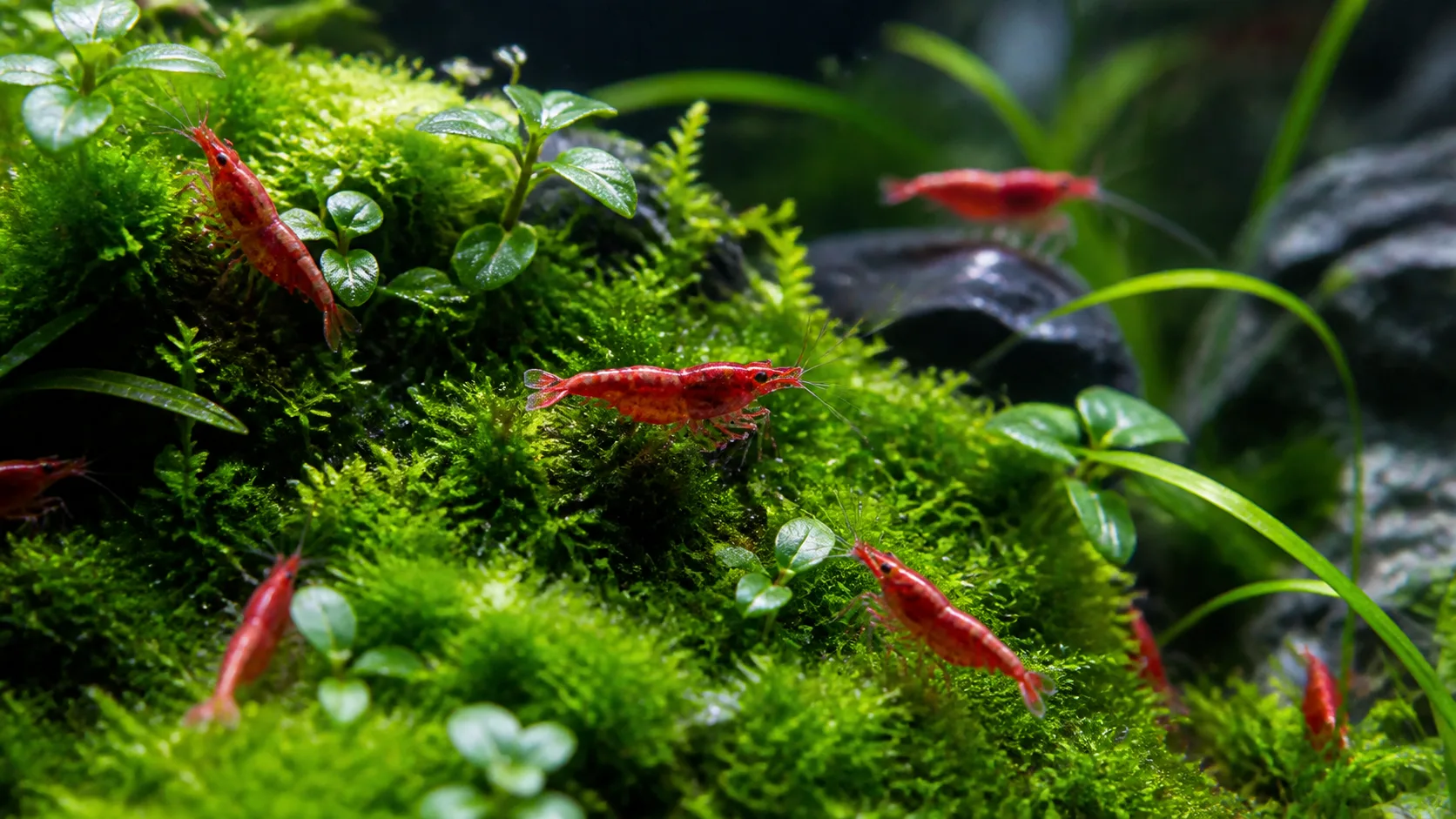
Dwarf freshwater shrimp are genuinely easy to fall in love with: they’re small, active, often brightly colored, graze constantly on algae and biofilm, and breed readily in a stable tank, which means a small starting group can grow into a self-sustaining colony without much intervention. They’re also a great fit for a planted tank specifically, since they spend most of their time picking through plant leaves and substrate rather than disturbing a carefully arranged layout.
Recommended Products
- Yellow Cherry Shrimp (Neocaridina davidi) — a hardy, beginner-friendly color variety
- Bloody Mary Red Shrimp (Neocaridina davidi) — an intensely red color variety, equally hardy
Both are Neocaridina davidi — the same adaptable species behind most of the color varieties in the hobby, just selectively bred for different pigmentation. Neocaridina tolerates a wider range of water parameters than more sensitive Caridina shrimp species, making it genuinely the right starting point for a first shrimp tank.
Tank Setup: Small, Planted, and Stable
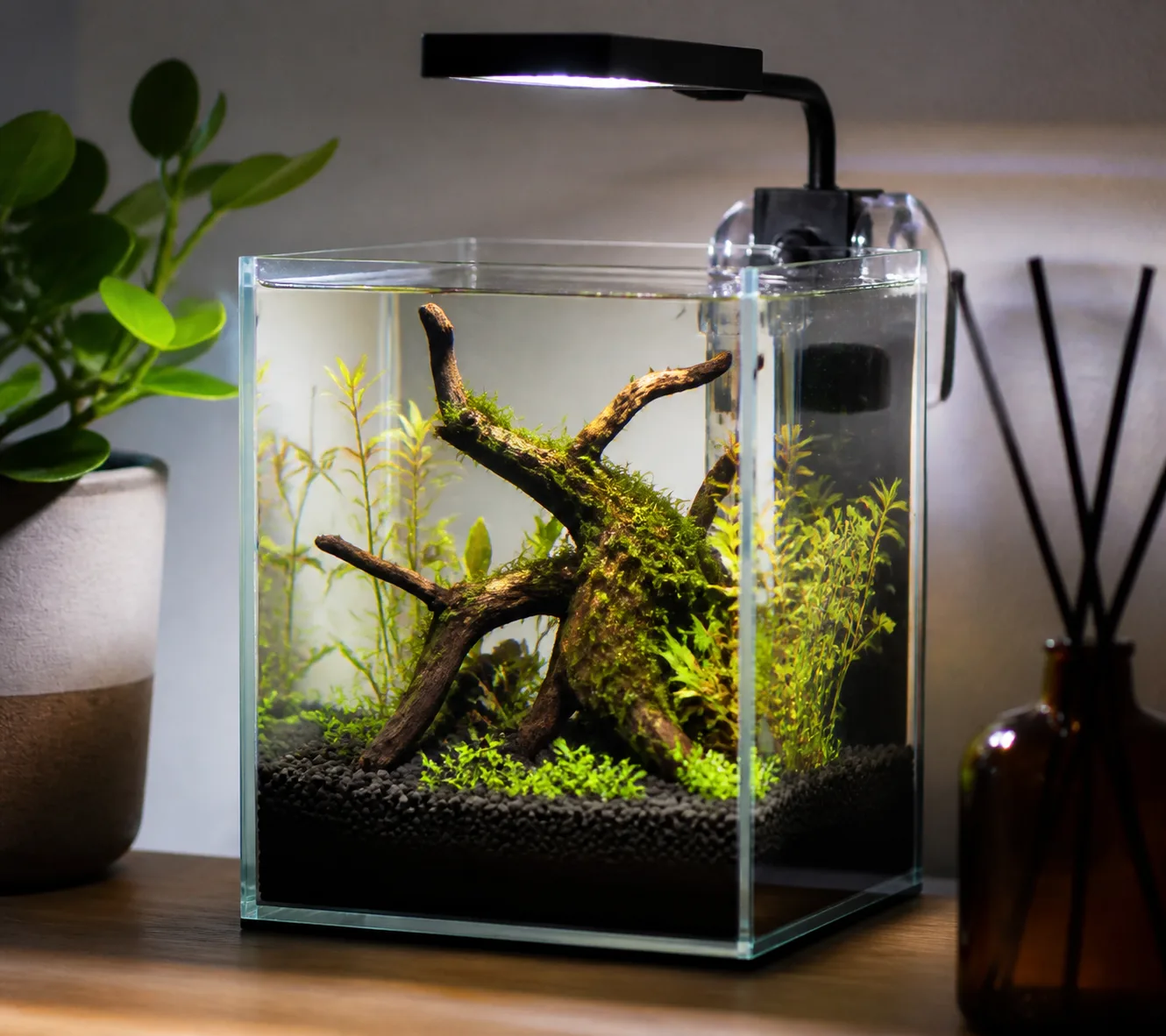
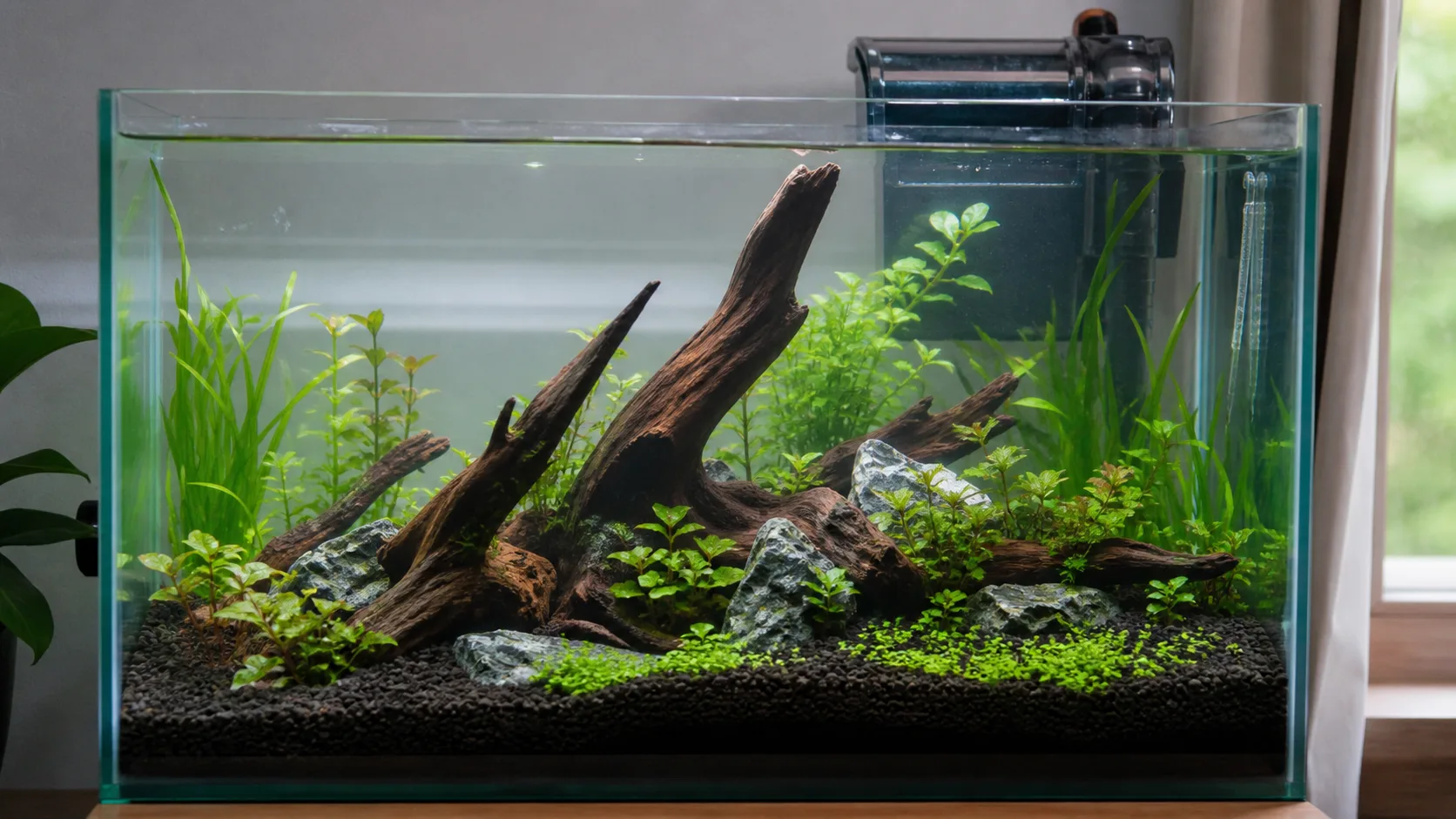
Shrimp don’t need a large tank — even a small nano setup works well, since a group of dwarf shrimp has a tiny bioload compared to fish of similar tank footprint. What matters more than size is stability: shrimp are considerably more sensitive to sudden parameter swings than most community fish, so a smaller, well-established, mature tank is often a safer environment than a large but newly set-up one.
Moss in particular is a shrimp-tank staple — it hosts biofilm and microorganisms shrimp constantly pick at, and its dense structure gives newly-hatched shrimp cover during the vulnerable first days after birth.
Recommended Product
- Star Moss (50g) — dense cover and grazing surface, a genuinely useful addition to any shrimp tank
Water Parameters
Neocaridina shrimp are genuinely adaptable, generally doing well with a pH between roughly 6.5 and 8, a temperature around 20–25°C, and — critically — undetectable ammonia and nitrite, with nitrate kept low. Unlike many fish, shrimp are particularly sensitive to sudden shifts, so gradual water changes and stable, established water matter more than hitting one precise number.
Because shrimp are smaller and generally more sensitive than fish, testing water regularly is worth the extra attention here — our water parameters guide covers what each reading means and how often to actually test.
Filtration: Gentle Is the Priority
Standard filter intakes are a real hazard for shrimp, particularly small juveniles, which can be pulled in and killed by an uncovered intake tube. A sponge-covered intake or a gentle internal filter with a fine pre-filter sponge is the safer choice, since it filters effectively without creating dangerous suction near where shrimp actually spend their time.
Recommended Product
- AquaSpeed A2001 BIO Internal Filter — a gentle, compact filter option, add a pre-filter sponge over the intake for extra shrimp safety
If you’re running a stronger filter that came with the tank, a simple foam pre-filter sponge slipped over the intake tube is a cheap, effective way to make almost any filter shrimp-safe without replacing it.
The Copper Danger Most Beginners Don’t Know About
Copper contamination isn’t always obvious either — some tap water, certain fertilizers, and even some “reef-safe” labeled products can carry trace copper that’s fine for fish but genuinely dangerous for a shrimp colony. When in doubt, research a product’s copper content specifically before adding it to a tank housing shrimp.
Tankmates: What Genuinely Works
The safest shrimp tank is a species-only tank, especially if breeding a colony is the goal — no fish, however peaceful it’s described as, is entirely above eating a shrimp small enough to fit in its mouth, and that includes newly hatched young even in tanks with adult-safe fish. If you do want tankmates, choose genuinely tiny, peaceful species and accept that some fry loss is likely.
Snails are a genuinely safe, complementary addition — they graze on the same algae and biofilm as shrimp without posing any predation risk, and many keepers run a combined shrimp-and-snail cleanup crew in the same planted tank without issue.
Feeding
Shrimp graze near-constantly on algae and biofilm, so an established, mature tank often provides a meaningful portion of their diet on its own. Supplement with a small amount of sinking food a few times a week rather than daily — shrimp are small enough that overfeeding fouls the water quickly, and uneaten food left to rot is a common, avoidable cause of water quality problems in a shrimp tank.
Recommended Product
- Royal Algea Sinking Cubes — sinking food designed for bottom-dwellers and shrimp
Watch for molted exoskeletons after feeding — shrimp shed their shell regularly as they grow, and it’s normal (even beneficial, as a calcium source) for them to eat the discarded shell afterward. Leave molted shells in the tank rather than removing them.
Common Beginner Mistakes
- Adding a fish medication containing copper to a tank with shrimp present
- Using a filter with an uncovered intake that pulls in small or juvenile shrimp
- Housing shrimp with fish or crayfish that will eat them, especially newly hatched young
- Overfeeding, fouling water quality in a tank with a naturally small bioload
- Introducing shrimp to a brand-new, uncycled tank instead of a stable, established one
- Making sudden large water changes instead of gradual, stable adjustments
Frequently Asked Questions
What’s the easiest shrimp species for a beginner?
Neocaridina davidi varieties — like Cherry Shrimp color forms — are the most forgiving and adaptable, tolerating a wider parameter range than more sensitive Caridina species.
Can shrimp live with fish?
Some peaceful, genuinely tiny fish species can coexist with adult shrimp, but expect some fry loss even then. A species-only tank is the safest option if growing a colony is your priority.
Why did my entire shrimp colony die suddenly?
Copper contamination is a common, often-overlooked cause — check any recently added medication, fertilizer, or new tap water source. A sudden large water change or parameter swing is another frequent culprit.
Can I keep crayfish with shrimp?
Not safely if you want to keep the shrimp colony intact — crayfish are opportunistic predators that will eat shrimp, particularly during molting or right after hatching.
How often should I feed my shrimp?
A small amount of sinking food a few times a week is usually enough in an established, mature tank, since shrimp continuously graze on algae and biofilm between feedings.
Is it normal to see empty shrimp shells in the tank?
Yes — that’s a molted exoskeleton, a normal part of shrimp growth. Leave it in the tank; shrimp often eat their own molted shell as a calcium source.
Conclusion
Freshwater dwarf shrimp are one of the most rewarding, low-maintenance additions to a planted tank once you know the handful of rules that actually matter: stable water over precise numbers, gentle filtration, zero tolerance for copper, and tankmates chosen carefully rather than assumed to be safe. Get those right and a small starting group can grow into a thriving, self-sustaining colony with very little ongoing effort.
If you’re setting up your first shrimp tank, explore MyTankScape’s current shrimp varieties and the gentle equipment that keeps a colony safe.
Recommended Products
Internal Link Map
- Yellow Cherry Shrimp
- Bloody Mary Red Shrimp
- Star Moss (50g)
- AquaSpeed A2001 BIO Internal Filter
- Royal Algea Sinking Cubes
- White Platinum Freshwater Crayfish
- Water Parameters 101: Testing pH, Ammonia, Nitrite, and Nitrate
- The Complete Guide to Using Moss in Terrariums and Paludariums